The preparation of scientific competencies in various fields of knowledge, and the production of innovative scientific research aims to serve society by providing exemplary education in an intellectually stimulating university environment.
Jobs | Scholarships | Students | Staff | Alumni

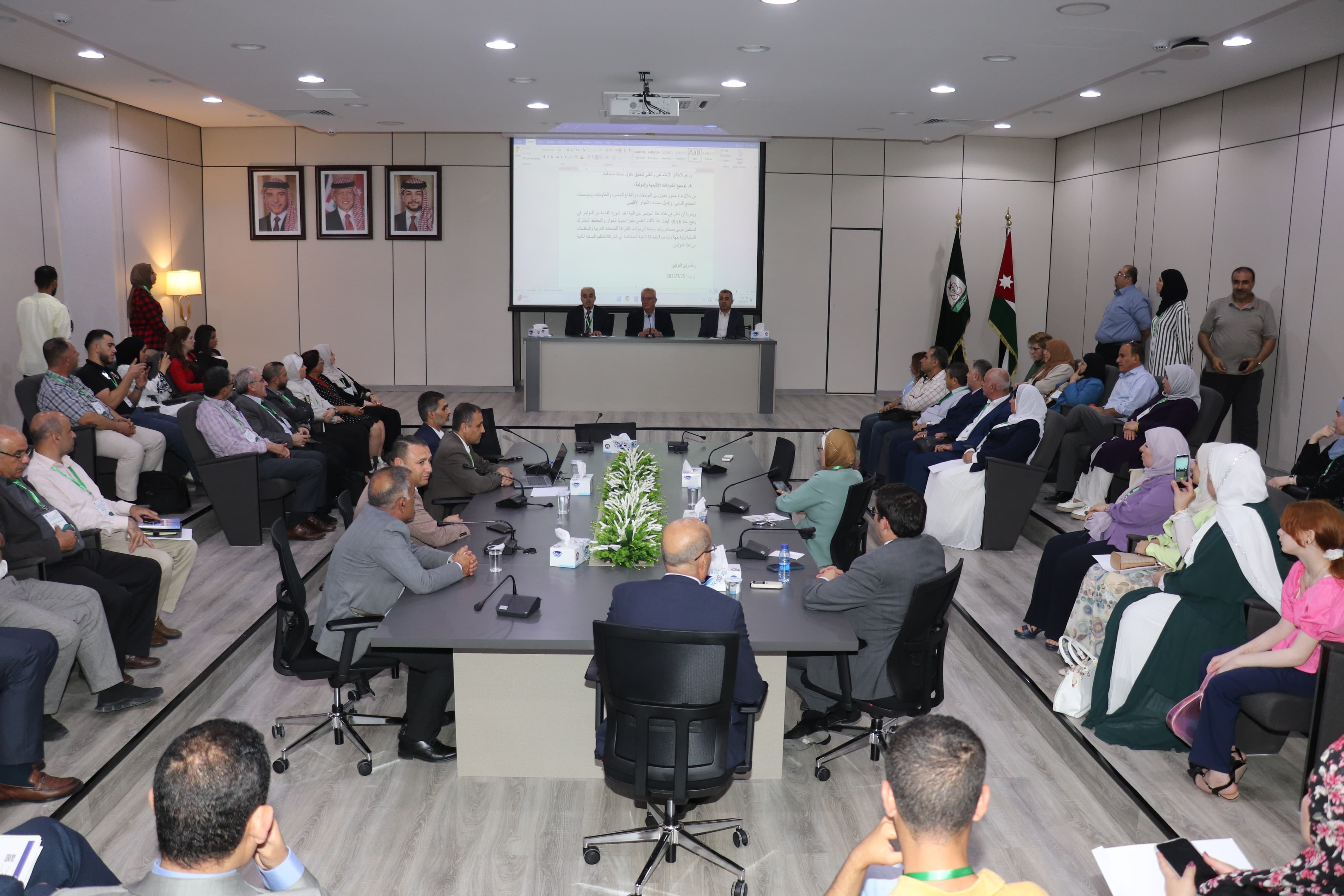
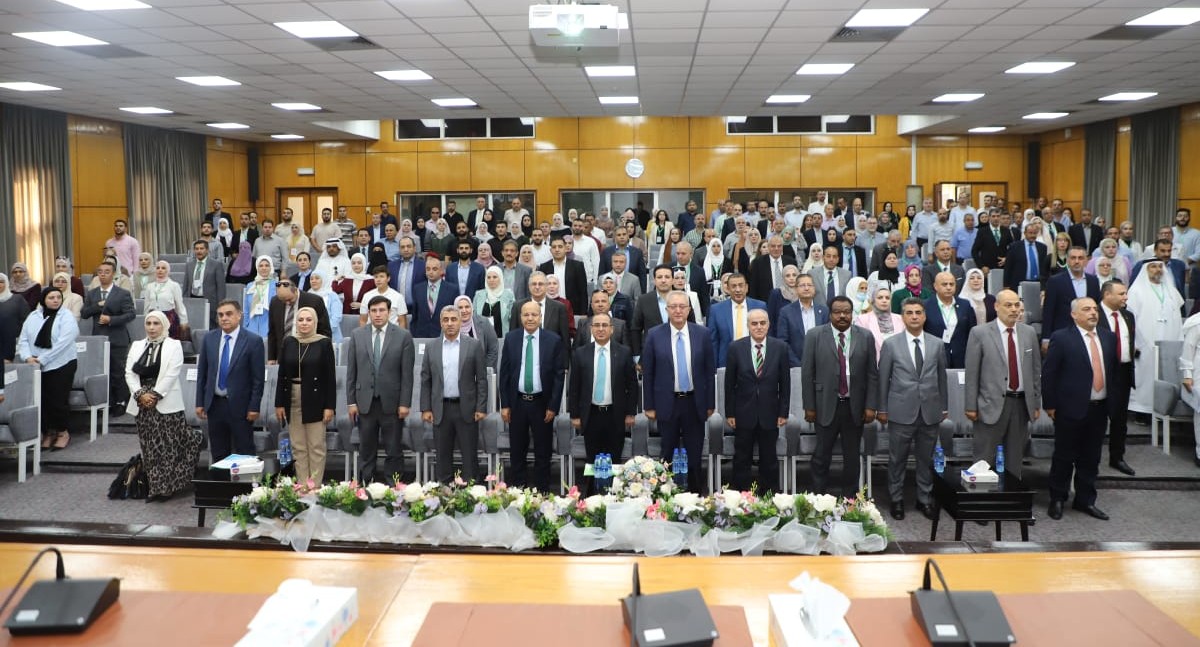
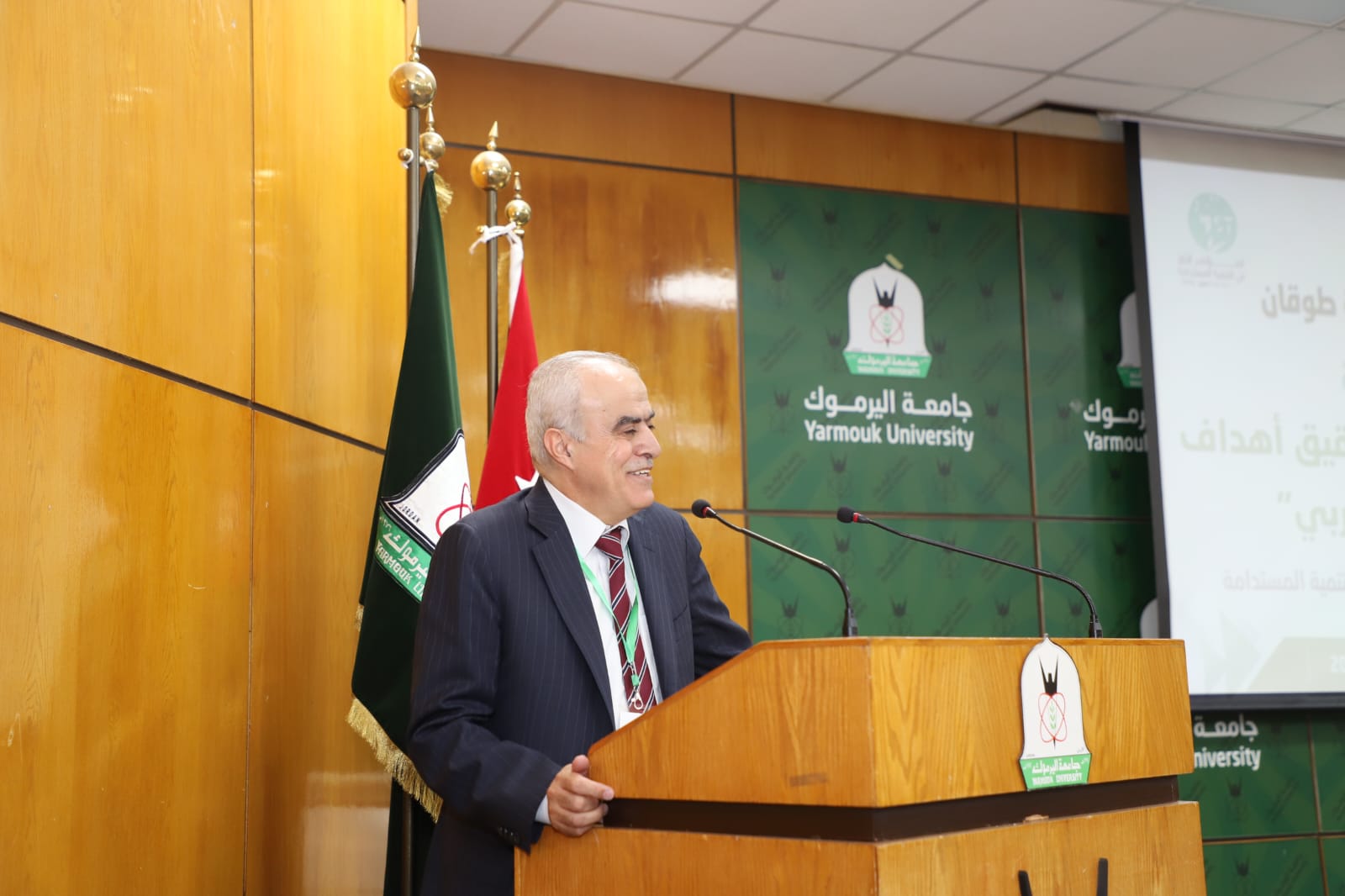
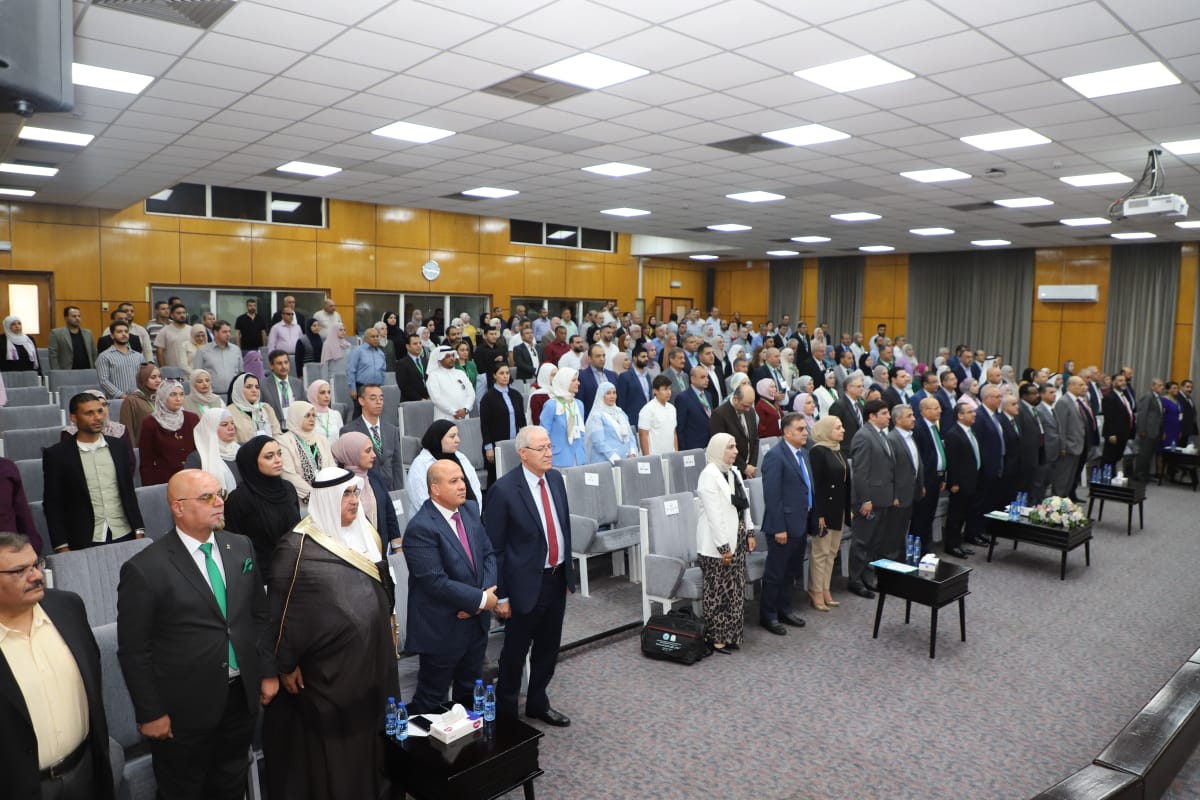
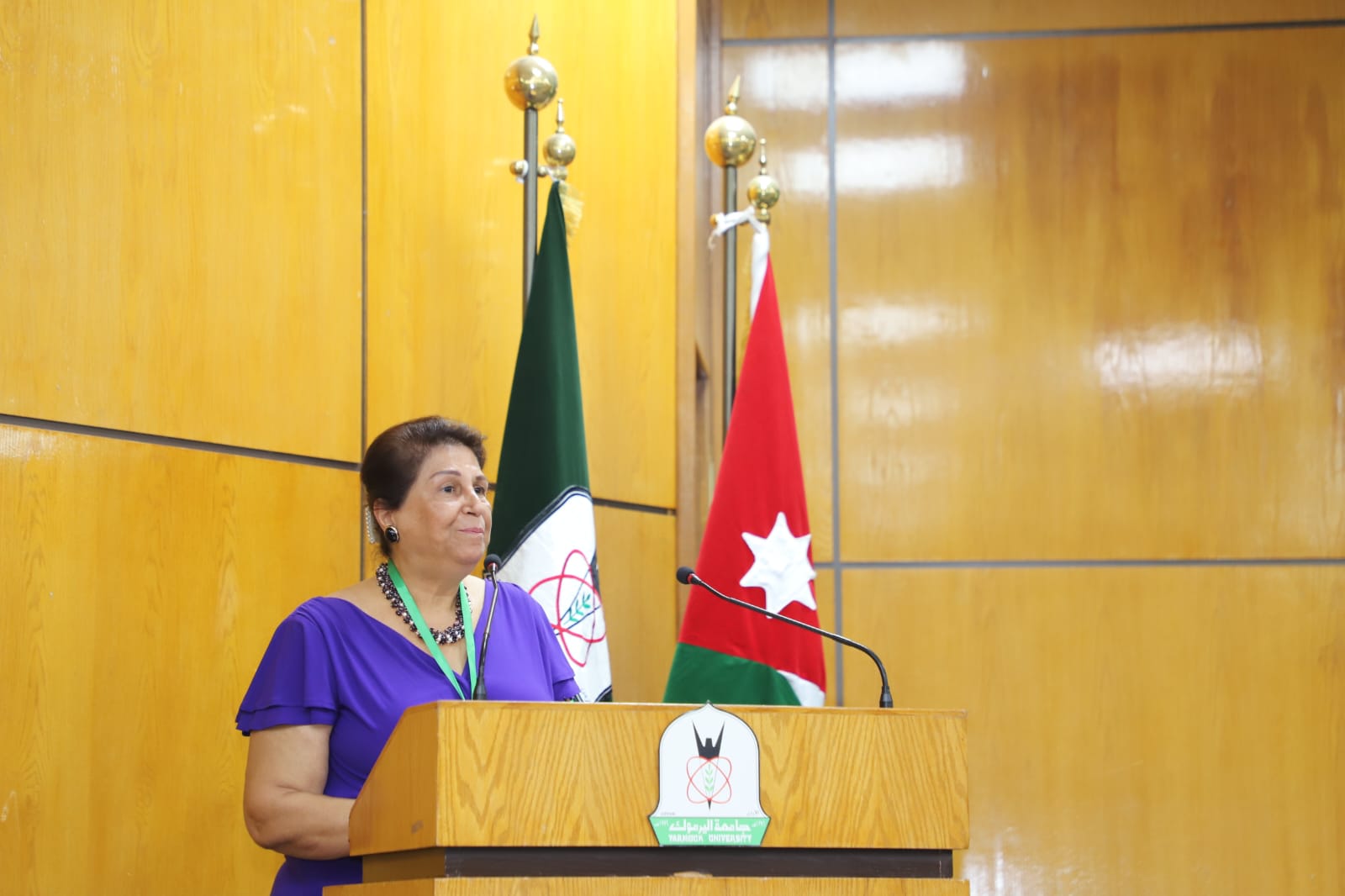
Participants in the first conference on SustainableDevelopment , organized by Yarmouk University through the Queen Rania Center for Jordanian Studies and Community Service in cooperation with the Center for Sustainable Development, entitled "From Vision to Reality: Assessing the Process of Achieving the Sustainable Development Goals in the Arab World", recommended the need to establish a joint Arab platform to monitor the progress made in achieving the Sustainable Development Goals in the Arab countries, and promote education for sustainable development to become a community culture and practice.
The participants also called for funding small projects and community initiatives, expanding regional and international partnerships, by building bridges of cooperation between universities, the private sector, governments, and civil society institutions, and activating regional dialogue platforms.
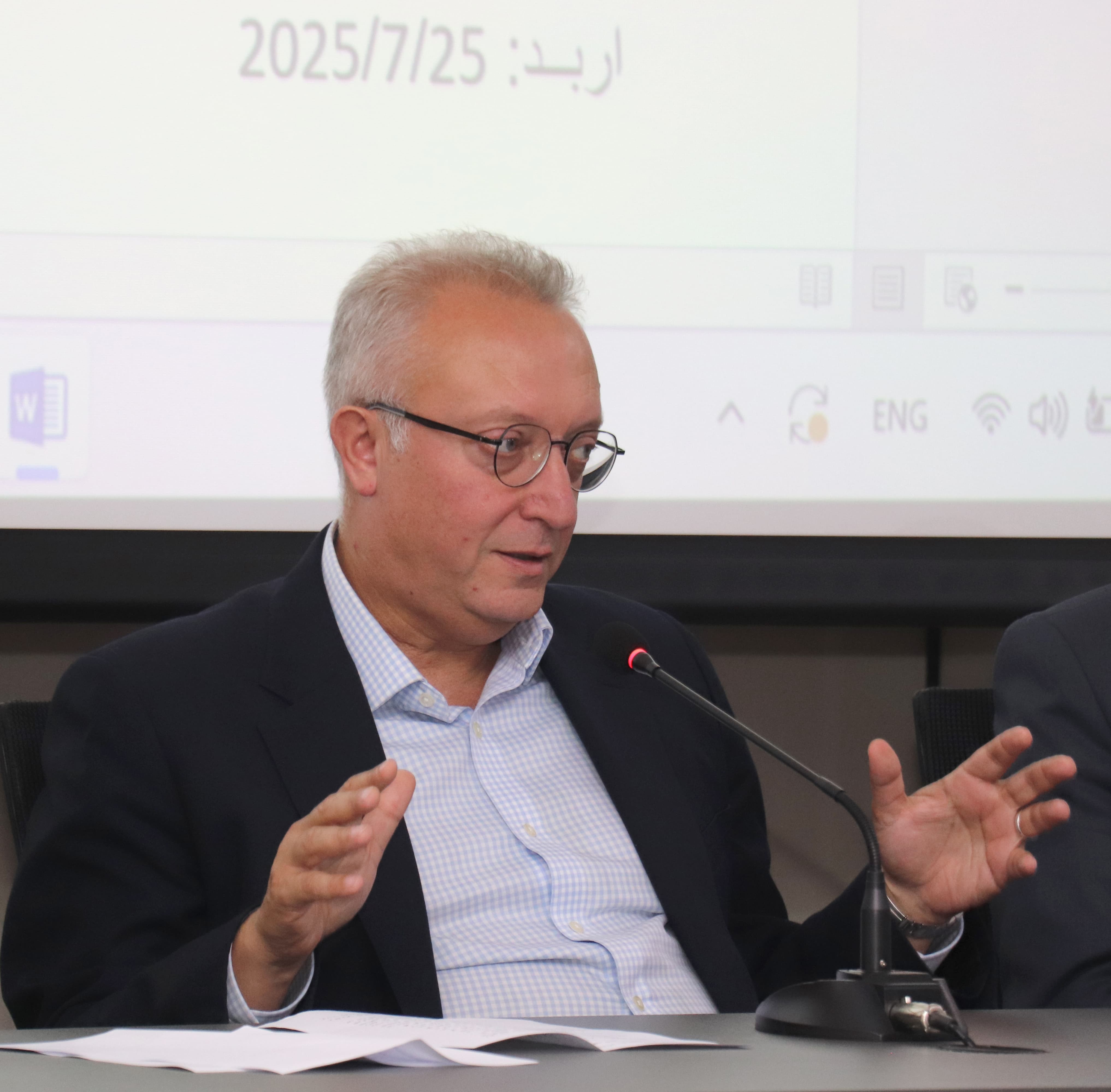
The President of the University, Dr. Islam Massad, who attended part of the activities of the closing session of the conference, stressed that the vision of the university is that this scientific meeting will remain an annual platform for dialogue and joint planning for a sustainable Arab future, stressing that Yarmouk University extends the hand of partnership to Arab universities and international organizations related to sustainable development issues to organizing the second edition of the conference.
He continued: In light of the recommendations of the conference, it is necessary to develop a regional electronic platform to collect and analyze development data in the Arab countries, so that it is a reference tool for decision makers and researchers.
Masad pointed to the importance of integrating the concepts of sustainability in educational curricula at all stages, and developing training programs to build the capacities of teachers and the educational community.
The conference, whose final statement was delivered by the Director of the Center, Dr. Abdelbaset Athamneh , started its work last Tuesday under the auspices of the Minister of Planning and International Cooperation Zeina Toukan, witnessed the holding of 15 sessions in addition to the main dialogue session, in which 76 working papers were presented. The activities of the conference also witnessed parallel sessions represented by training workshops, and a collection of institutional successes stories.
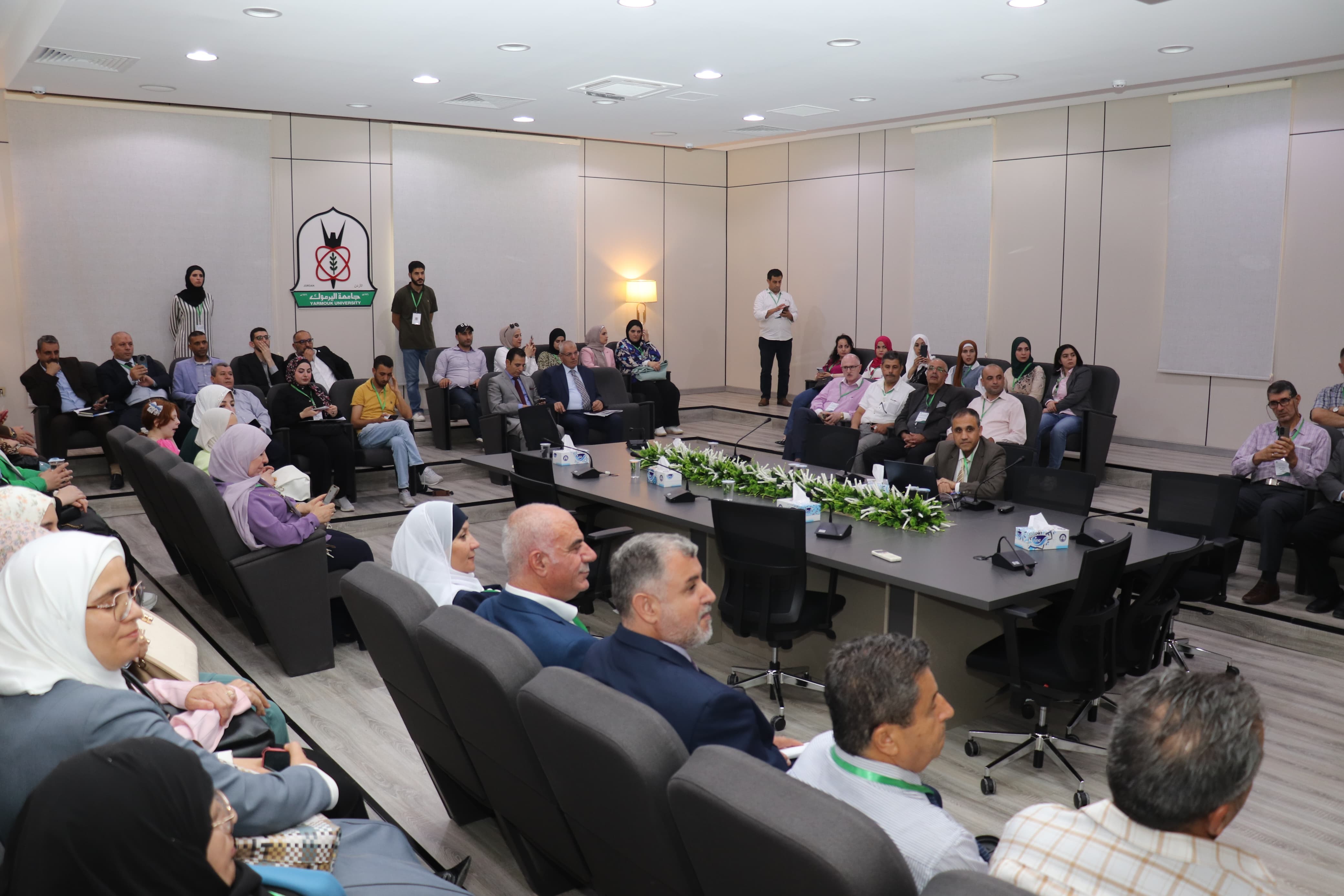
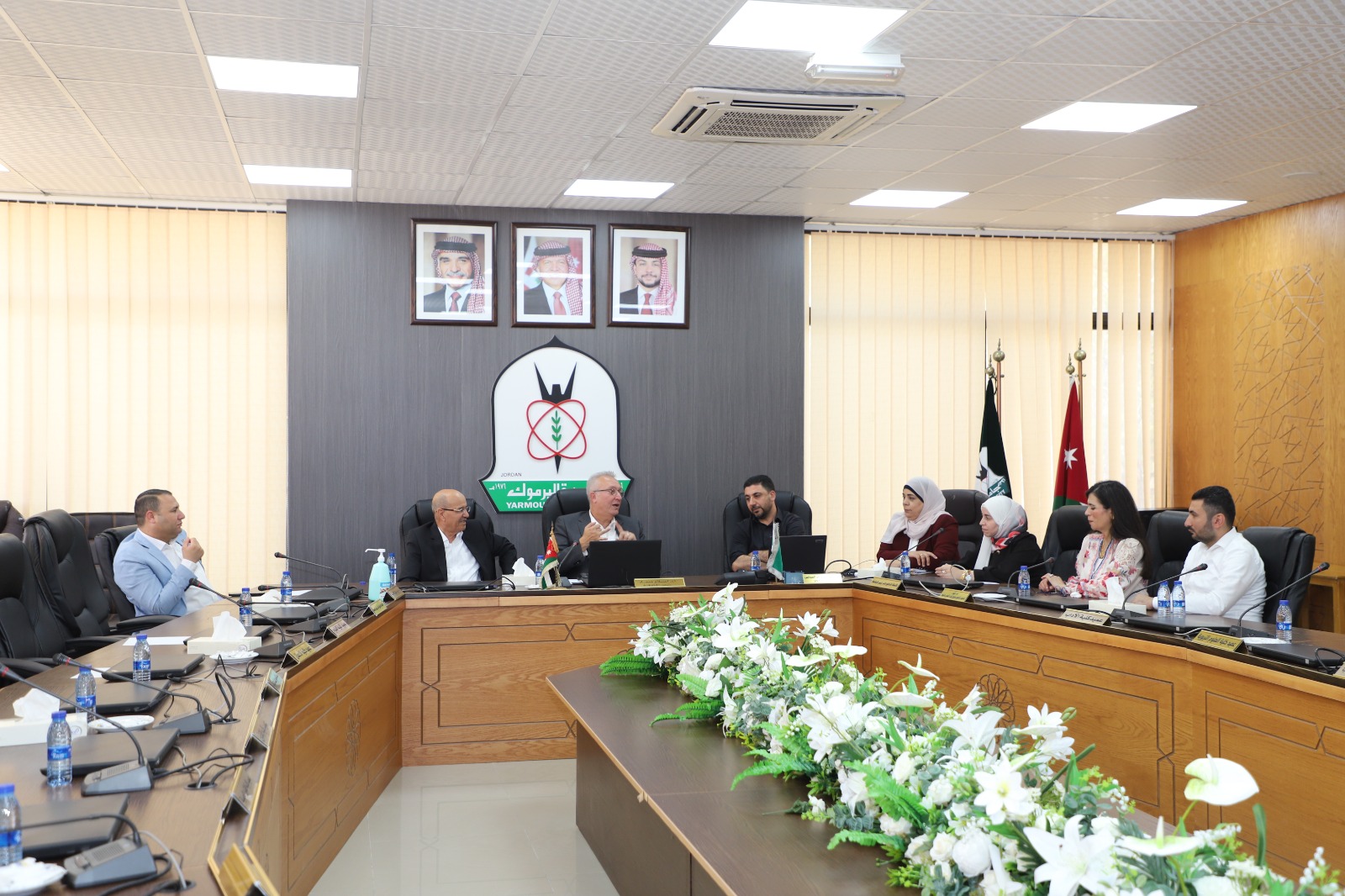
The President of Yarmouk University, Dr. Islam Massad, launched the new website of the Language Center to align with academic standards and digital communication needs. The site aims to achieve the goals of both the university and the center, provide clear and up-to-date information to its audience, and promote the Arabic program for speakers of other languages. The site is available in identical Arabic and English versions to help increase the number of visitors and users benefiting from its services.
Dr. Massad praised the efforts of the Language Center, which always works hard to keep up with rapid changes and developments, consistently offers new and updated services to its students, and uses modern methods in teaching and training. These efforts have helped and continue to help the center become one of the leading language centers in the region.
Massad emphasized the key role the center plays in fulfilling the mission of the Hashemite Kingdom of Jordan and Yarmouk University in disseminating and teaching the Arabic language, through its outstanding and successful Arabic program for speakers of other languages, which attracts many students from around the world each year.
Dr. Rana Qandeel, the Director of the Center, pointed out that the different courses content that are offered in the center is taught by the center across its various academic tracks in Arabic and English, language packages, and the Arabic program for speakers of other languages have been carefully updated.
She also indicated that the new website included goals, a vision, and academic plans, all based on the university’s quality standards.
Qandeel added that the website now includes an updated version of the language package program, which the center has been offering since the 2022/2023 academic year. It also lists the colleges and majors the program covers. She noted that the update focused on improving how the center communicates with the public, making it easier for people to find information about its work and activities, especially the Arabic program for speakers of other languages.
She highlighted that the new website features the center’s free plans, activities, and events, all carried out by the center, as well as a collection of photos and videos available through the center’s dedicated YouTube channel.
Regarding the newly launched APasol platform, part of the Arabic program for speakers of other languages, Qandeel stated that a dedicated icon has been added to the website. It includes detailed information about the platform, as well as application and registration forms for courses offered to students and professors from around the world.
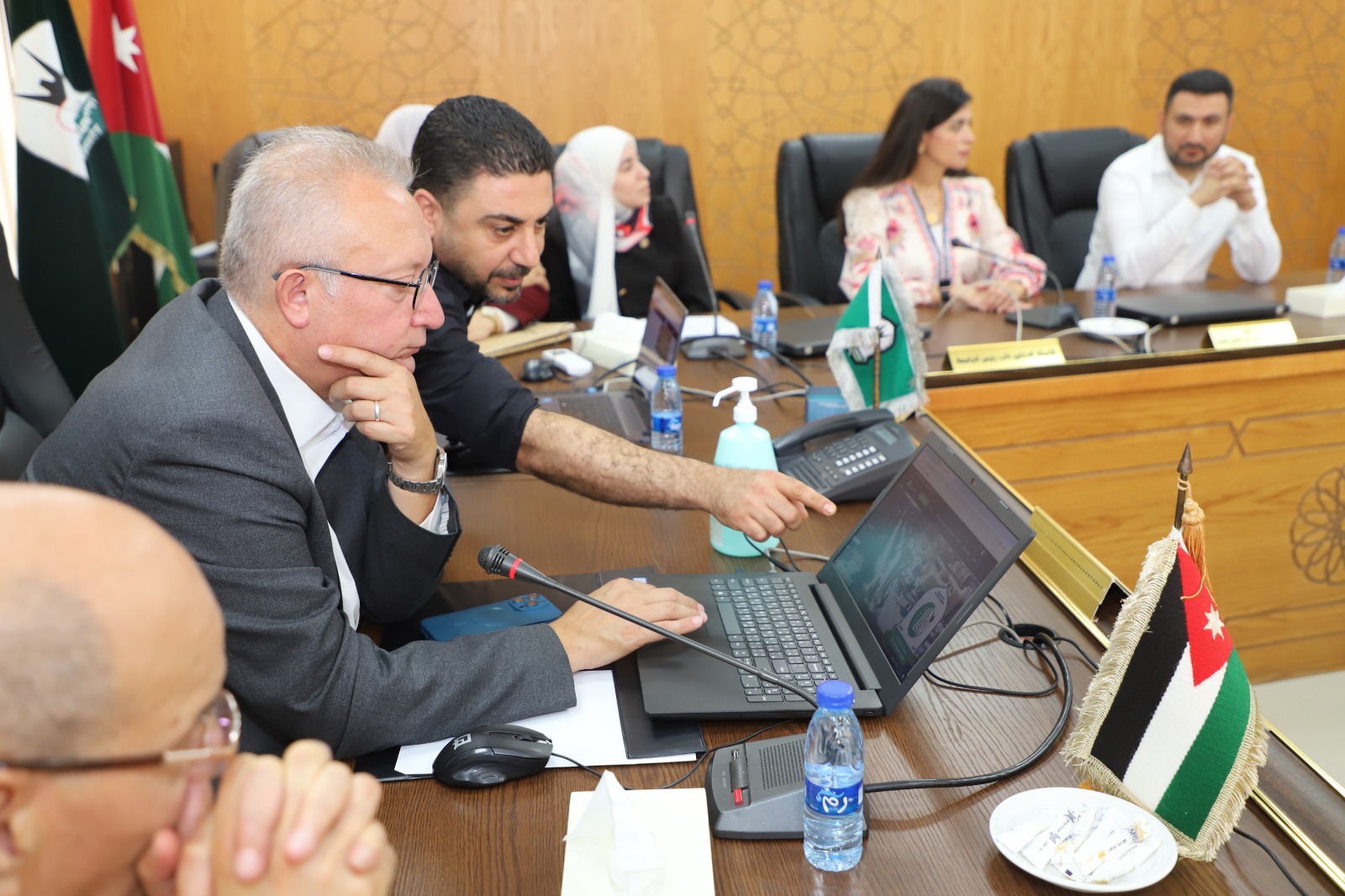
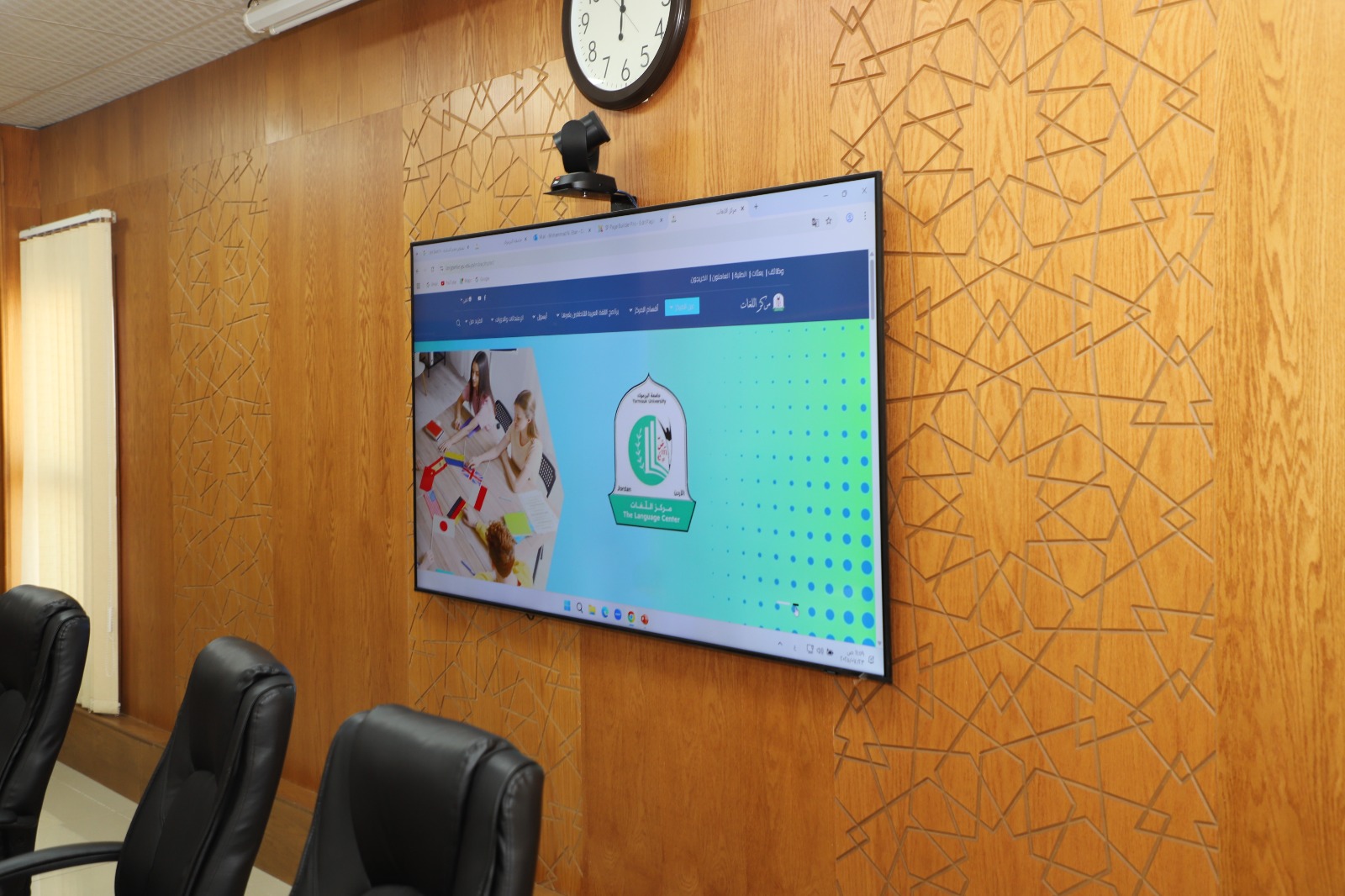
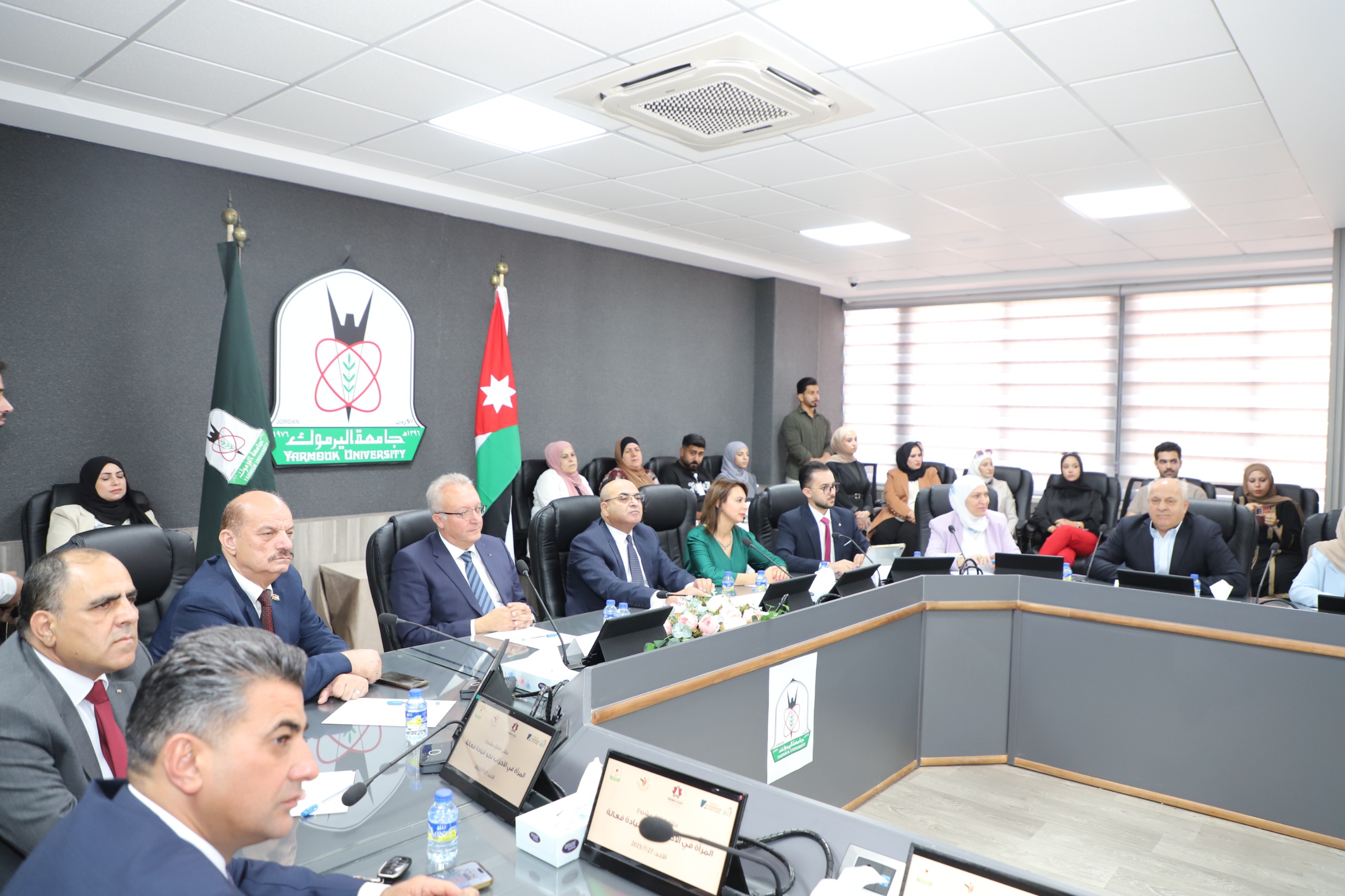
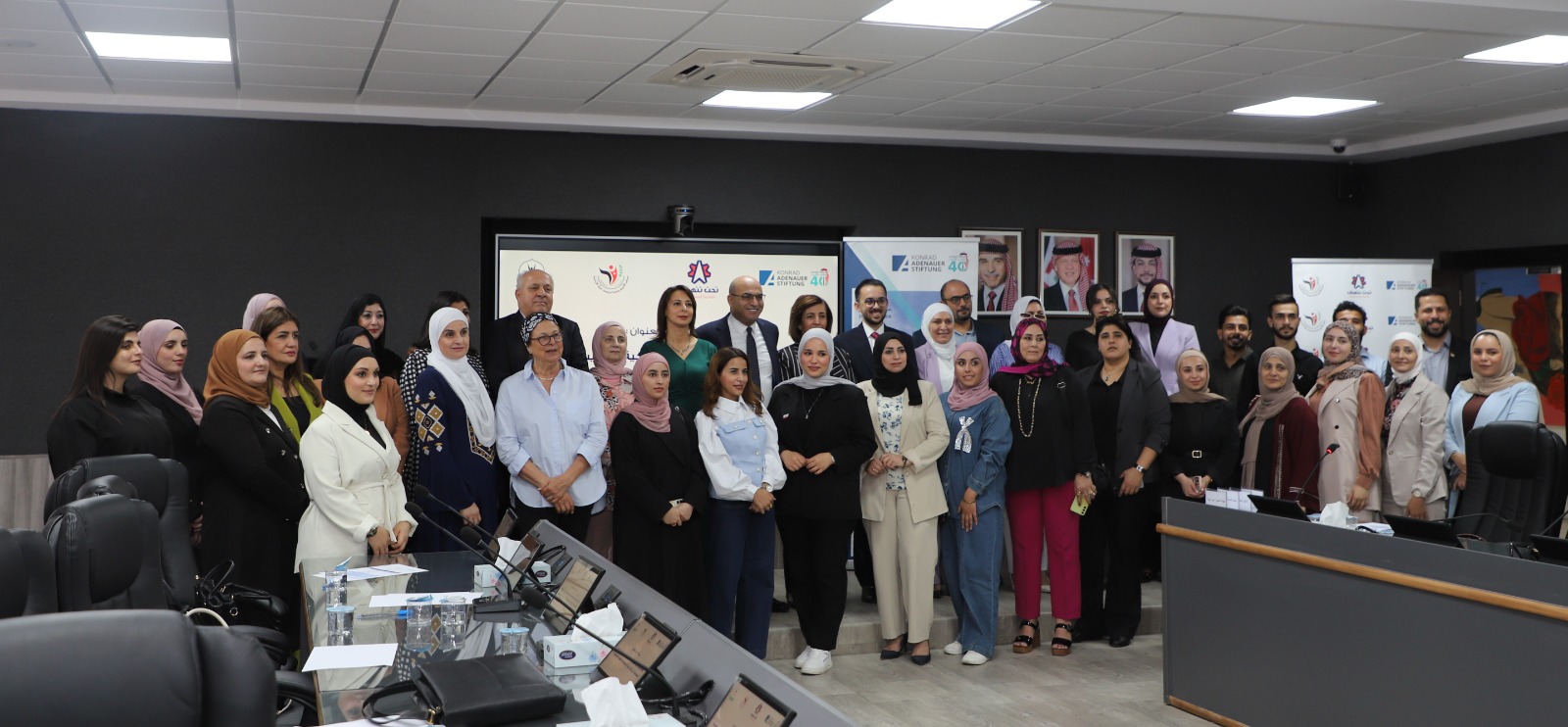
On behalf of the Minister of Political and Parliamentary Affairs, Secretary-General Dr. Ali Khawaldeh, and in the presence of the President of Yarmouk University, Dr. Islam Massad, the launch ceremony of the project titled “Women in Political Parties: Towards Effective Leadership” was held. The event was organized by the Princess Basma Center for Jordanian Women’s Studies in cooperation with “We Rise” Center for Sustainable Development and the Konrad Adenauer Foundation – Jordan Office.
In his opening remarks, Dr. Khawaldeh commended the efforts of civil society institutions and universities in supporting citizen engagement, especially among youth and women, in the political process. He stressed the importance of encouraging all political parties to empower women across various sectors, provide them with opportunities, and regard them as essential and genuine partners in the decision-making process, in line with the aspirations of the Jordanian state.
He added that anyone following the development of Jordan’s political movement will recognize a genuine interest in women’s issues, as reflected in legislative progress. He noted that legislative reforms have facilitated women’s presence in the political arena, and that there is a growing societal consensus on the need for their active participation in sustainable development. He also highlighted several indicators showing that Jordanian women are making rapid strides in strengthening their role in political life — with women’s participation in Jordanian political parties now reaching 44%.
For his part, Dr. Islam Massad emphasized that the project reflects Yarmouk University’s strong belief in the role of Jordanian women as active partners in shaping a promising future. He pointed out that the university, through this initiative, aims to empower women in political party work as a strategic step toward building a political landscape that amplifies the voices of all segments of society.
He also noted the university’s commitment to raising awareness among the younger generation about the importance of engaging with societal issues and participating in the political process, as well as empowering women in various fields. The university strives to harness its resources to develop joint programs with active community partners, in alignment with the Royal vision and Jordan’s distinctive national identity — with its unique social, intellectual, and political character.
Dr. Massad emphasized the need for unified efforts by all institutions and decisionmakers to support and empower educated and aware Jordanian women, enabling them to
reach the highest levels through their knowledge, dedication, and determination to succeed.
In turn, Amer Abu Dalou, Director General of “We Rise” Center for Sustainable Development, stated that the “Women in Political Parties: Towards Effective Leadership” project carries strategic dimensions that go beyond traditional empowerment. It seeks to reshape the reality of Jordanian women’s political participation. He noted that the partnership with the Princess Basma Center for Jordanian Women’s Studies represents a national alliance that aims to create new political pathways to highlight active female leadership across sectors.
He further noted that the project will produce a national guide of best practices for empowering women within political parties — to serve as a practical reference supporting the development of internal party policies. In addition, a digital media campaign will be launched to showcase inspiring female figures within parties and break stereotypes surrounding women’s political roles.
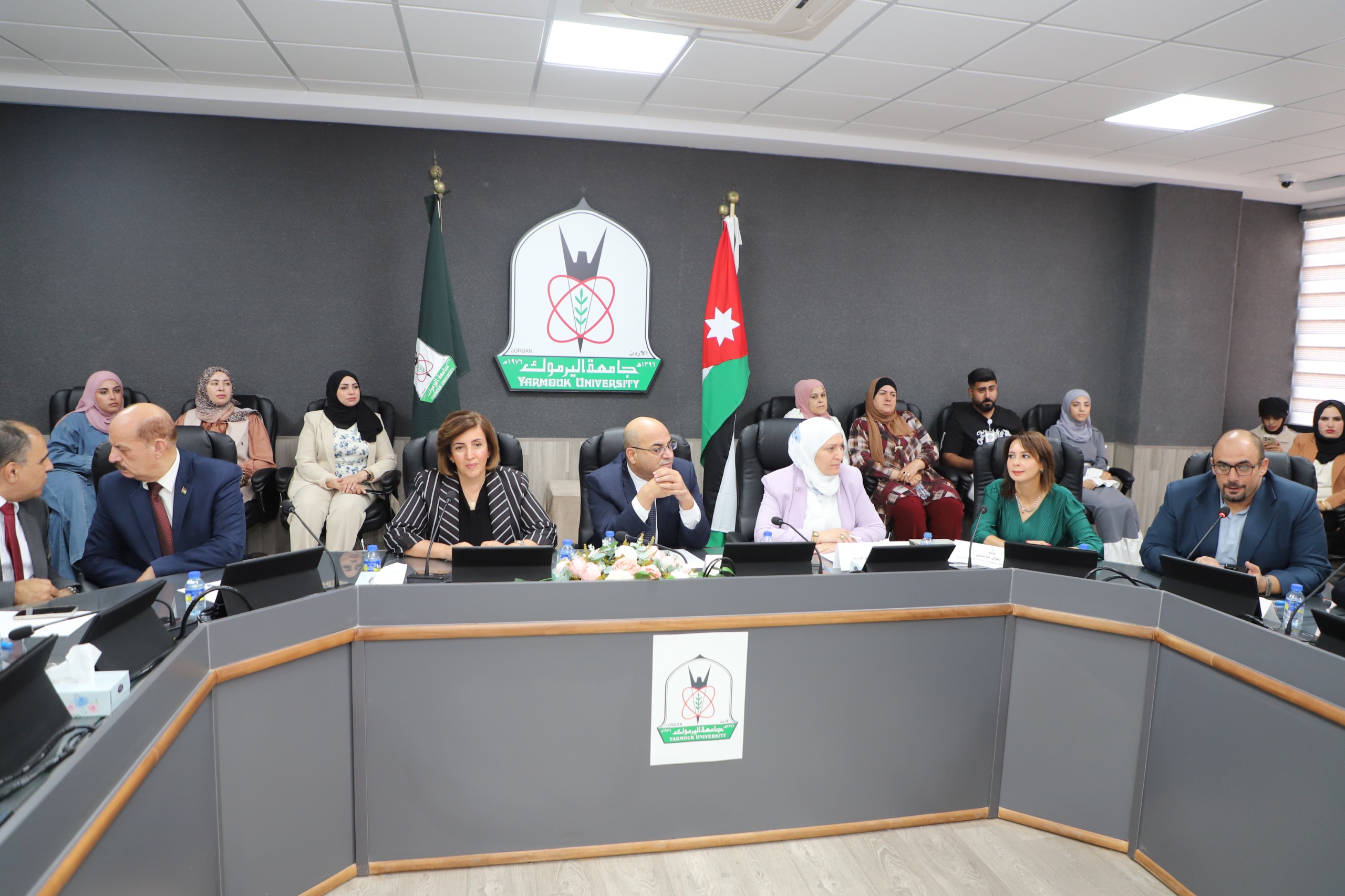
The launch ceremony included a panel discussion titled: “Four Years Since the Launch of the Royal Committee for Modernizing the Political System: Where Does the Jordanian Woman Stand in the Political Scene?” Panelists included Hala Al-Jarrah, Member of Parliament (MP) representing the Islamic National Party; Secretary-General of the Ministry of Political and Parliamentary Affairs, Dr. Ali Khawaldeh; Member of the Board of Commissioners of the Independent Election Commission, Dr. Abeer Dababneh; and Director of the Princess Basma Center for Jordanian Women’s Studies, Dr. Batoul Al-Muhaisen. The session was moderated by the Center’s Deputy Director, Dr. Tareq AlNasser.
The event was attended by MP Abdul Nasser Al-Khasawneh, MP Shahir Al-Shatnawi, and MP Tareq Bani Hani, Vice Presidents of Yarmouk University Dr. Mousa Al-Rababaa and Dr. Fadia Mayyas, as well as a number of faculty and administrative staff members and local community representatives.
Al-Rifai: The conference reflects Jordan's commitment to achieving sustainable development
locally, regionally, and internationally.
- Masad: The conference's theme lies at the heart of Yarmouk University's national and Arab
Mission.
- Athamneh: The conference is an objective response to the necessities imposed by the current
Arab reality.
- Al-Ghusaini commends Yarmouk University's initiative to bring together Arab researchers to
discuss a common Arab concern.
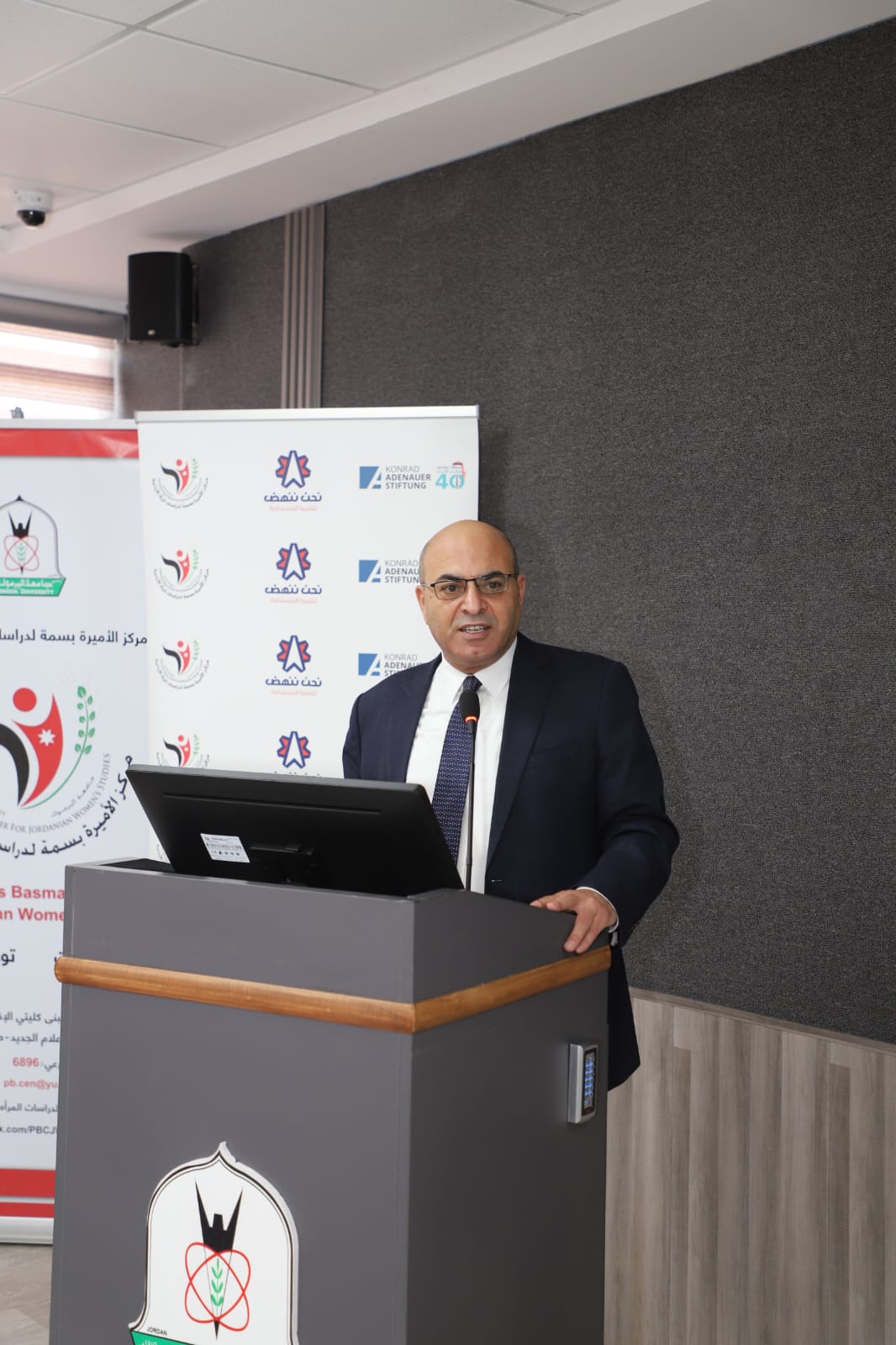
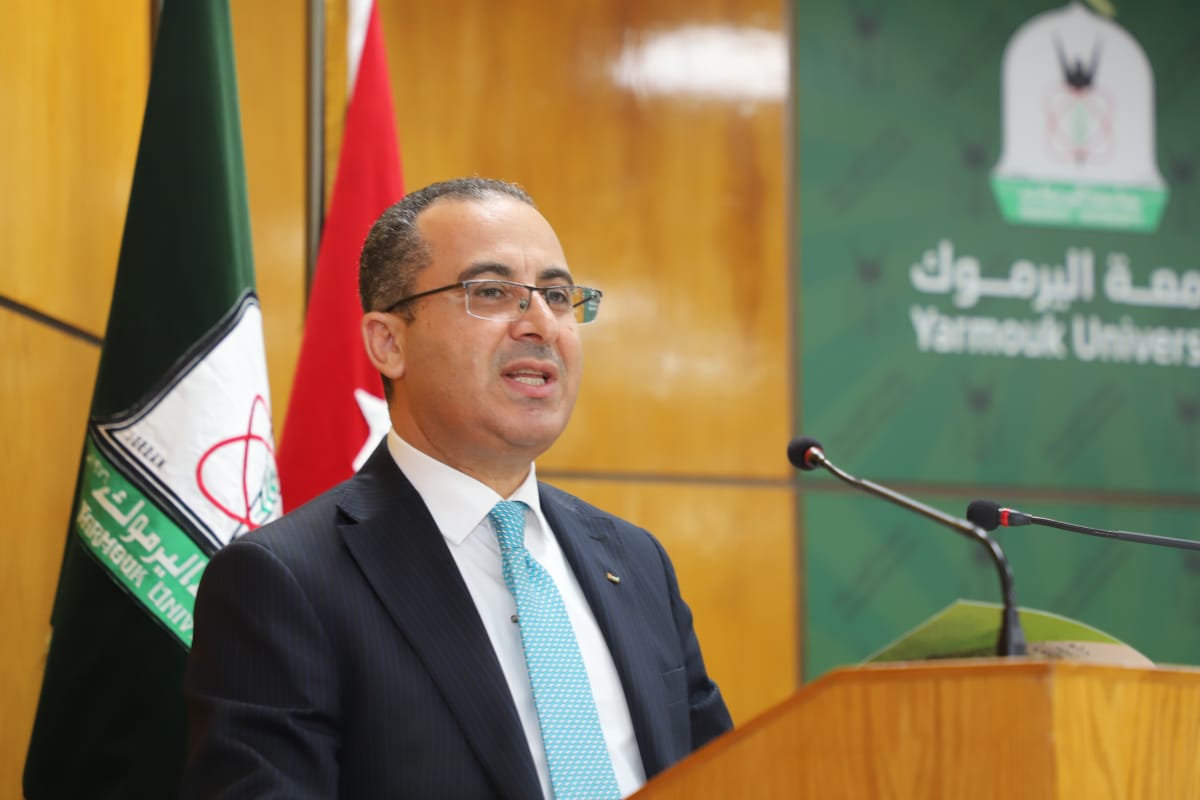
On behalf of the Minister of Planning and International Cooperation, the Ministry's Secretary-General, Marwan Al-Rifai, sponsored the opening of the first Sustainable Development Conference at Yarmouk University, in the presence of the university's president, Dr. Islam Massad. The conference, titled "From Vision to Reality: Assessing the Progress of Achieving the Sustainable Development Goals in the Arab World," was organized by the Queen Rania Center for Jordanian Studies and Community Service and the Center for Sustainable Development Studies. In his opening remarks, Al-Rifai commended Yarmouk University's efforts in organizing this important, qualitative conference as we approach the halfway point toward 2030, the target date for achieving the 17 UN goals. He emphasized that this conference reflects Jordan's ongoing commitment, under the guidance of its wise leadership, to achieving comprehensive and sustainable development at the local, regional, and international levels.
He emphasized that achieving the Sustainable Development Goals is not without challenges that directly impact countries' ability to finance development, provide basic services, and invest in the future. As a result, the government revised its national blueprint for sustainable development, emphasizing funding sources, increasing public spending efficiency, and fortifying private sector collaborations. Additionally, the government declared five major pledges:
Development of data systems, decent work, education, climate action, and food security.
Al-Rifai emphasized the importance of continuing, embracing experiences, enhancing coordination for Arab and international action, improving the sharing of knowledge, fostering group thinking, and exploring creative solutions.
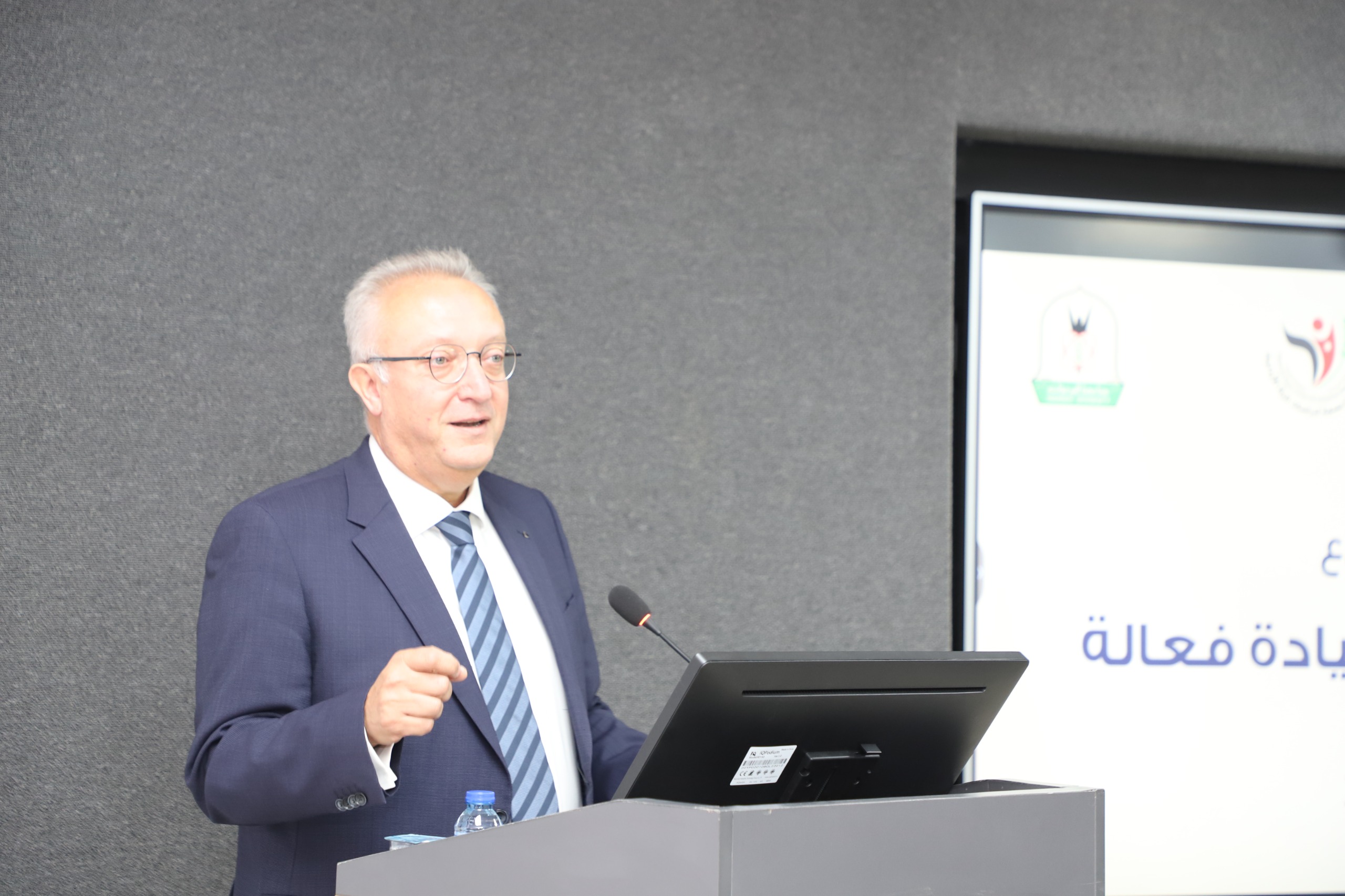
Massad, for his part, underlined that the conference's theme is central to Yarmouk.
The university's national and Arab mission statement explains how, since its inception, it has contributed significantly to development challenges through community service, high-quality instruction, and reliable scientific research. He emphasized that one of the key tenets of social advancement is the university's ideology, which is founded on incorporating sustainable development concepts into its programs, initiatives, and strategic objectives. In order to achieve societal progress, he also underlined how it fosters an innovative culture, advances applied research, and opens up fresh opportunities for international collaboration. Massad continued: "The Arab region has witnessed positive steps towards sustainable development over the past decade, but many of these challenges still exist." He emphasized that Yarmouk University, through this conference, seeks to achieve several fundamental objectives, including conducting an in-depth analysis of the achievement of the Sustainable Development Goals, identifying existing gaps and challenges, establishing effective partnerships between governments, the private sector, and civil society, exchanging knowledge and successful experiences, and developing practical, applicable recommendations that contribute to supporting national and regional policies in the field of sustainable development.
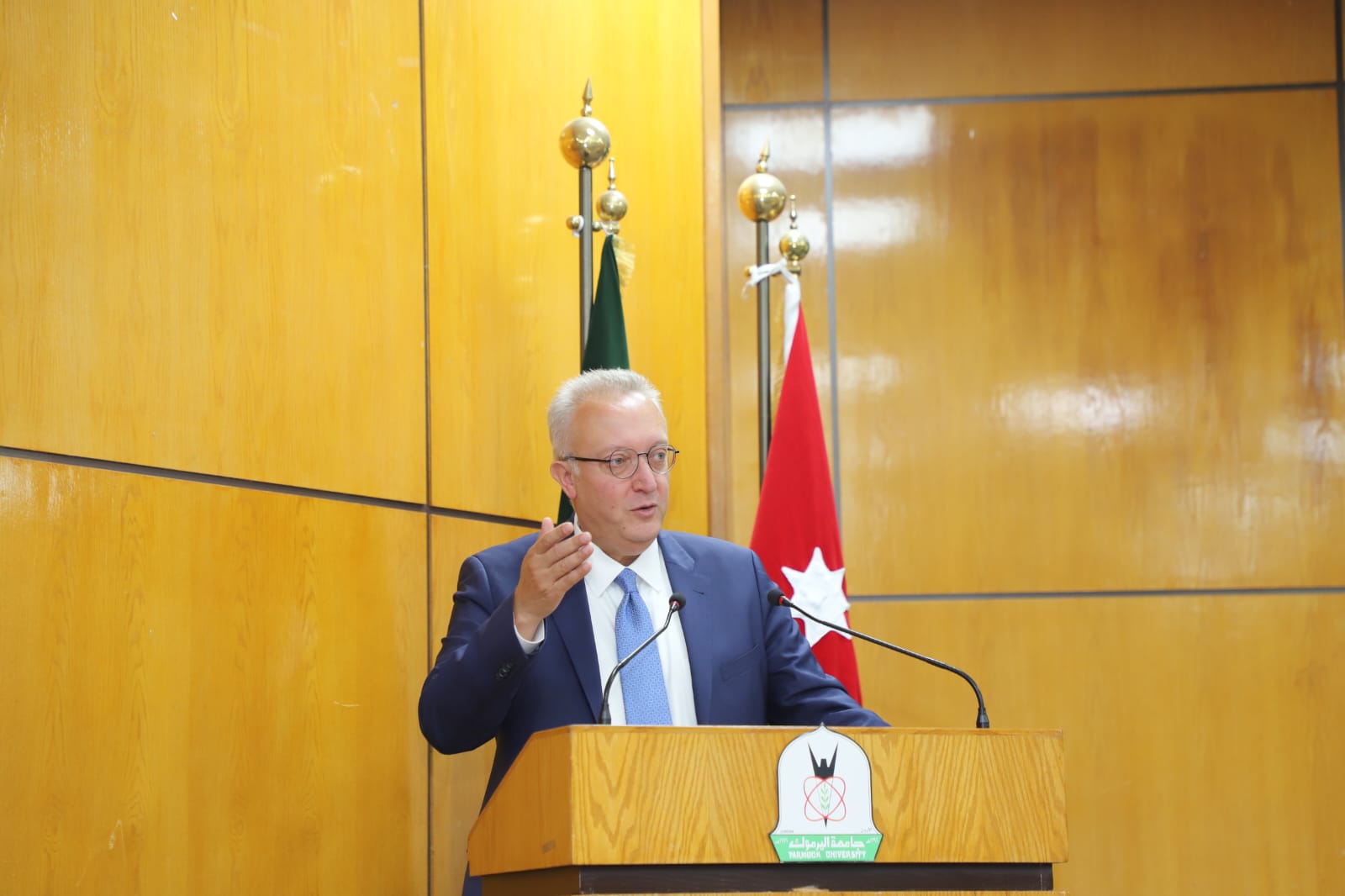
Dr. Abdul Basit Athamneh, Director of the Queen Rania Center for Jordanian Studies and Community Service and the Center for Sustainable Development, emphasized that organizing the conference comes as an objective response to the necessities imposed by the current Arab status quo, in light of the accumulated challenges we are witnessing, all of which intersect at a fundamental crossroads entitled: the future of sustainable development in our Arab region. He noted that despite the differences in political and economic situations among Arab countries, there are undeniable commonalities and similar development aspirations. He noted that in a world moving toward regional blocs and cross-border cooperation, Arab partnerships in the field of sustainable development have become a necessity, not a theoretical luxury. Athamneh called on conference participants to present actionable recommendations based on successful Arab case studies and authentic development experiences, enabling decision-makers to confidently move toward a sustainable future. Dr. Nuha Al-Ghusaini from Lebanon delivered the conference participants' speech, praising the efforts of Yarmouk University, which has always been an effective and open platform for addressing people's issues and the aspirations of Arab societies for justice, dignity, and sustainability. She noted that this scientific conference constitutes an advanced platform for knowledge dialogue and research networking, bringing together researchers and experts from diverse countries and academic backgrounds around a shared Arab concern and questions, such as: Where do we stand about the Sustainable Development Goals? What has been achieved? What has faltered? How can we redraw the path with more innovative and effective tools and partnerships? She called for reviewing priorities and policies, and investing in this type of conference as a platform for developing realistic solutions based on our Arab reality and responding to its challenges by harnessing the energies of youth, supporting innovation, promoting a culture of active citizenship, and adopting artificial intelligence and digital transformation responsibly and fairly, which has become a strategic necessity to improve services, enhance transparency, and raise the efficiency of government performance, especially in light of declining resources and increasing crises.
The first day of the conference included a dialogue session titled "Sustainable Development Goals in the Region: Achievements and Challenges After a Decade." The participants included the Secretary-General of the Arab Thought Forum, Dr. Sadiq Al-Faqih; the Director-General of the Department of Statistics, Dr. Haidar Freihat; the Deputy Resident Representative of the United Nations Development Program in Jordan, Majida Al-Assaf; and the Ministry of Water and Irrigation, Engineer Bashar Batayneh.
The first day's activities included three scientific sessions. The first was titled "Progress in Achieving the Sustainable Development Goals in the Arab Region: Achievements and Gaps," the second was titled "Legal and Institutional Dimensions of Achieving the Sustainable Development Goals in Arab Countries," and the third was titled "Health and Sustainable Development: Opportunities and Challenges." The conference's activities and sessions will be held over three days, with the participation of researchers and experts from 17 Arab countries. They will discuss 80 research papers addressing several conference themes, including progress in achieving the Sustainable Development Goals in the Arab region, good governance and institutional mechanisms for implementing the Sustainable Development Goals, addressing climate change and promoting green growth, and the role of technology and innovation in achieving the Sustainable Development Goals.
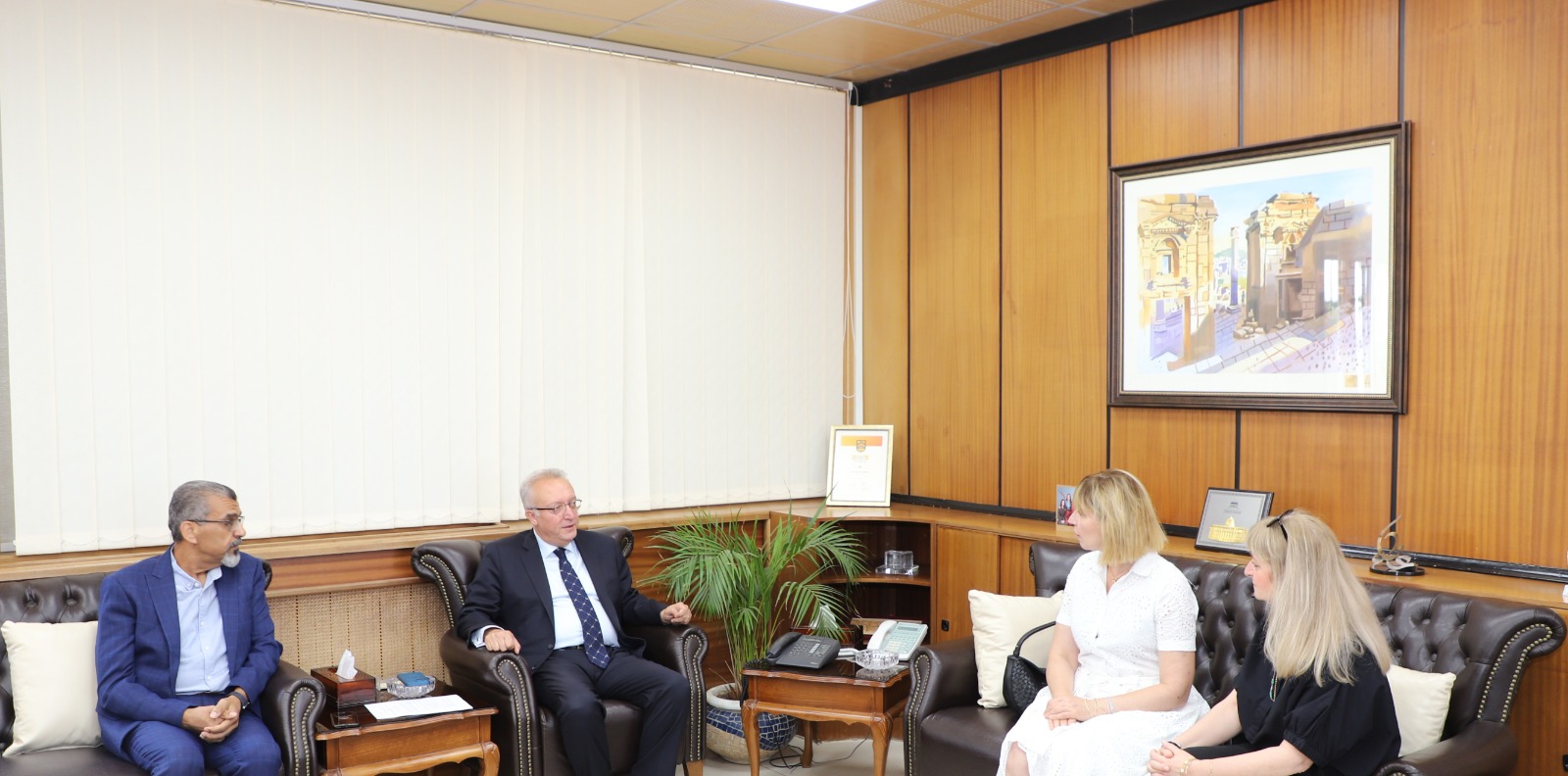
Yarmouk University President Dr. Islam Massad received a delegation from the Italian Agency for Development Cooperation, headed by the agency's director, Roxana Weber, and Claudia Tedeschi, an expert in cultural heritage and sustainable tourism at the agency. The delegation discussed possible avenues of cooperation between Yarmouk University, through the College of Archaeology and Anthropology, and the Italian Agency to implement a research project on cultural heritage.
During the meeting, Massad reviewed the university's origins, its colleges, and the specializations it offers in various scientific, health, and humanitarian fields. He highlighted the university's academic, scientific, and pioneering advantages at the national, Arab, and international levels in several disciplines, most notably the College of Archaeology and Anthropology, for which Yarmouk University has been ranked among the top 250 universities worldwide.
He pointed out Yarmouk University's interest in expanding its network of scientific and research cooperation with various academic and research entities and organizations worldwide. This positively impacts the university's educational process, provides opportunities for students to complete their postgraduate studies, and enables faculty members to collaborate with researchers from various countries to exchange expertise and knowledge. During the meeting, which was attended by the Dean of the Faculty of Archaeology and Anthropology, Dr. Mustafa Al-Naddaf, Massad affirmed the university's readiness, represented by the Faculty of Archaeology, to cooperate with the Italian Agency for Development Cooperation to implement the project, which focuses on cultural heritage, in the regions of Abila-Quwailba and Makawir-Madaba. He noted the college's distinguished academic, administrative, and technical cadres, both nationally and internationally, who have contributed since the college's inception to the discovery of numerous archaeological sites, in addition to the excavation and restoration operations carried out by the college at various archaeological and heritage sites in the Kingdom.
For her part, Weber affirmed the agency's keenness to cooperate with Yarmouk University, given its distinguished academic and research reputation. She noted the Italian Agency for Development Cooperation's efforts to implement this project, as one of the European Union's cultural heritage projects, in cooperation with the Faculty of Archaeology and Anthropology. She also noted the agency's efforts to enhance scientific cooperation between Yarmouk University and various Italian universities. She noted that the agency implements numerous international cooperation initiatives aimed at promoting sustainable development. During their visit to the university, the delegation toured the Jordanian Heritage Museum and the college's laboratories, where they viewed the scientific equipment and devices available.
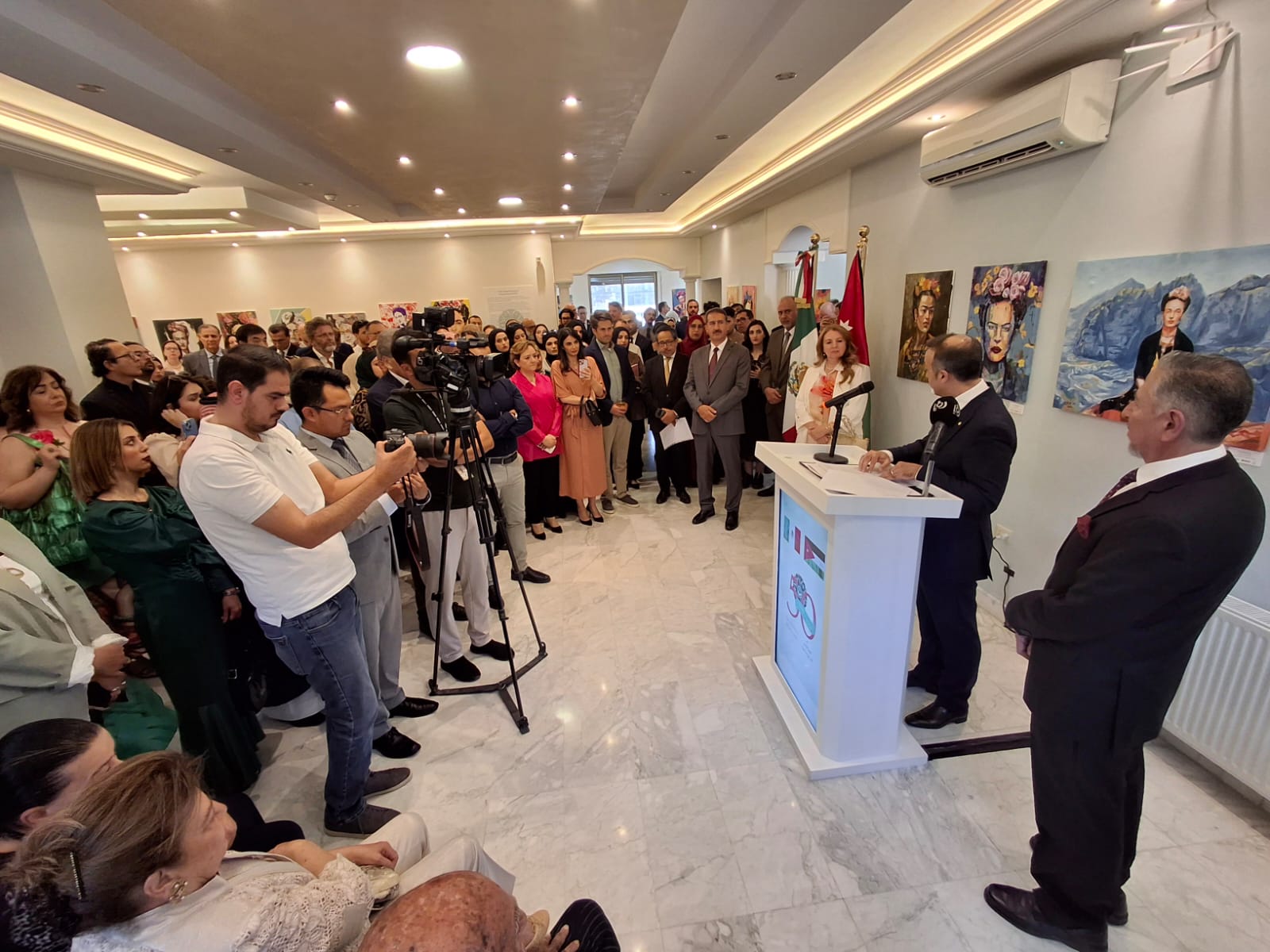
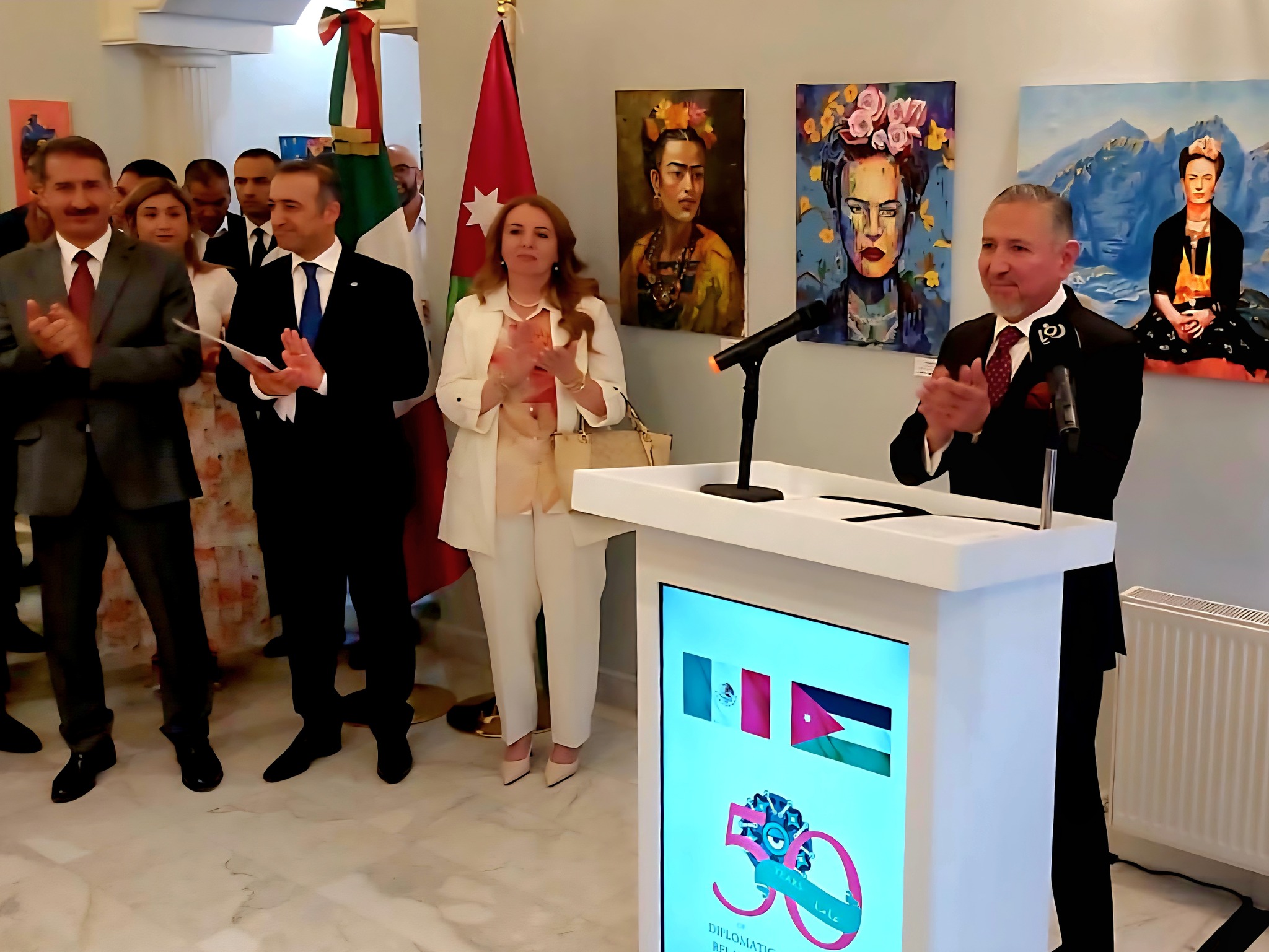
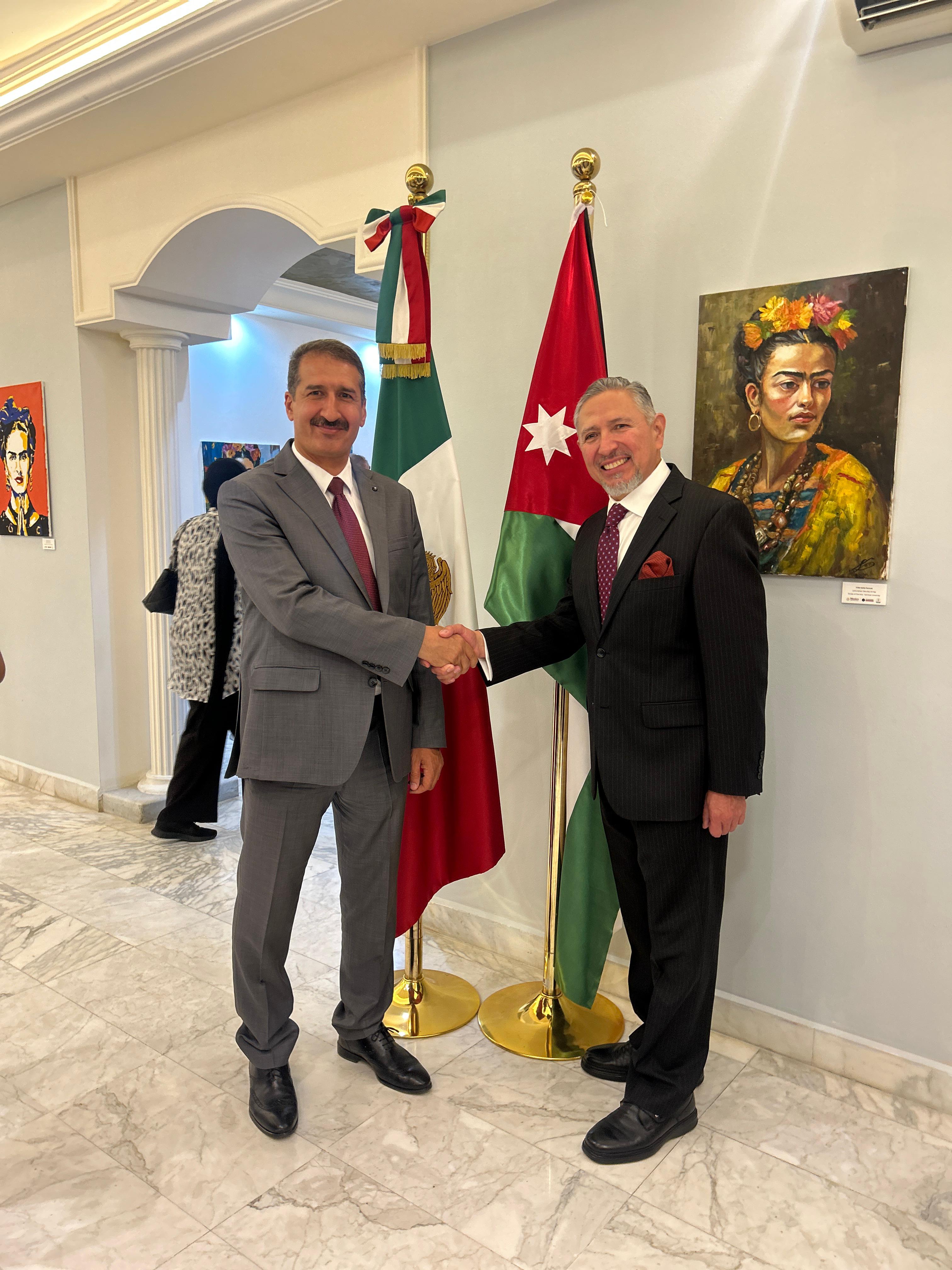
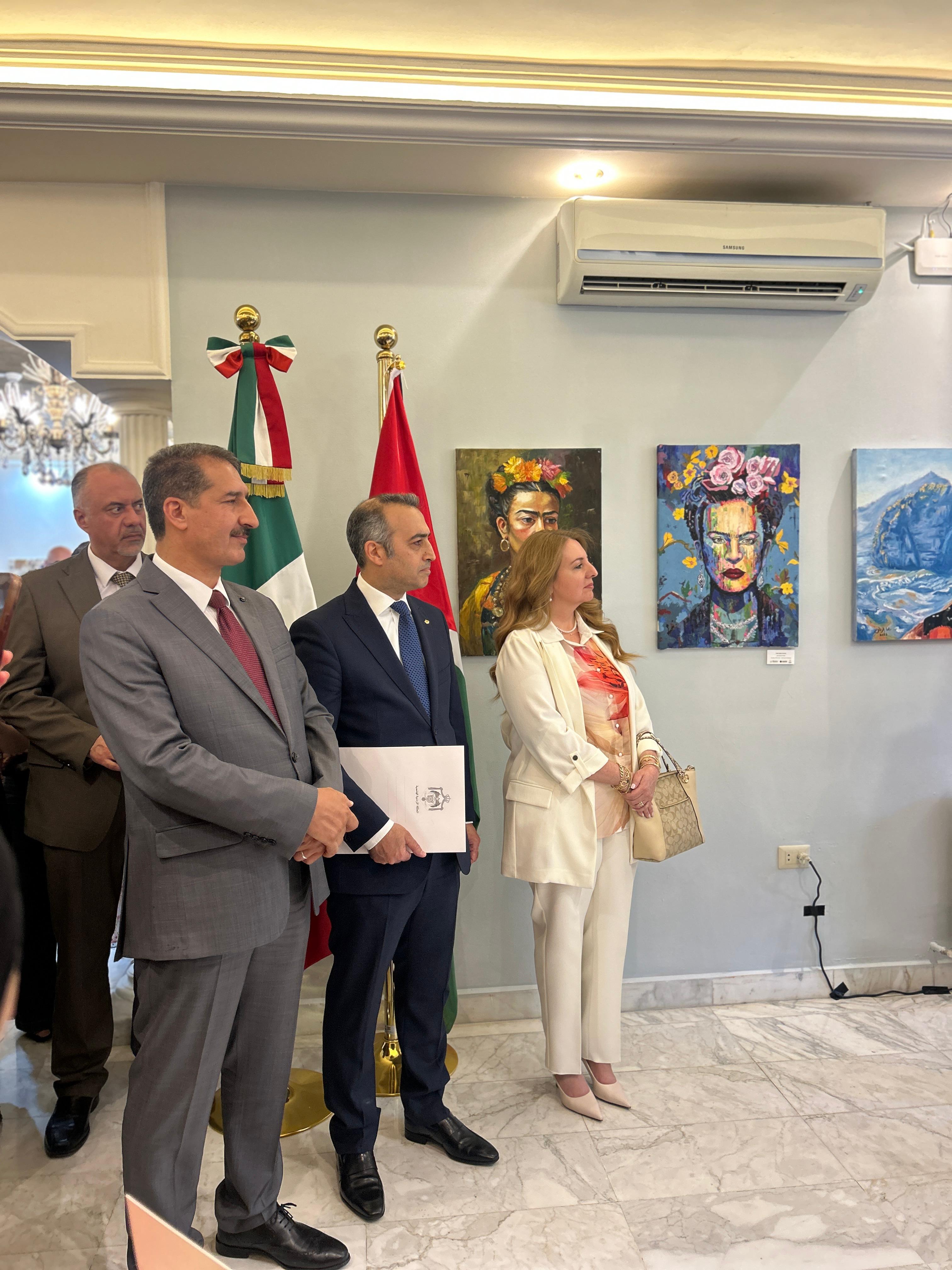
To commemorate the 50th anniversary of Jordan and Mexico's diplomatic ties, the Mexican Embassy in Amman hosted a visual arts exhibition in which the Fine Arts faculty took part. "Frida Through the Eyes of Young Jordanian Artists," the exhibition's title, was attended by Dr. Nancy Nimroqa, Minister of State. Under the direction of Dr. Mohammed Salem, Head of the Fine Arts Department, the exhibition included 77 modern pieces of art that drew inspiration from the life of Mexican artist Frida Kahlo. More than 70 male and female college students produced the pieces, which represented Kahlo's symbolic presence as a worldwide symbol of artistic integrity and audacity while also expressing their own visual interpretations of her legacy.
The Mexican ambassador to Jordan, said that the two nations' relationship goes beyond formal and institutional frameworks to include deep-seated cultural and human ties. “The art exhibition is a clear indication of the deep appreciation that young Jordanian artists have for contemporary Mexican art," he said.
Salem emphasized the role that Yarmouk University's Fine Arts faculty plays in fostering artistic and cultural communication, pointing out the significance of these efforts in enhancing the college's artistic visibility both domestically and abroad, showcasing students' creative energies, and creating opportunities for collaboration with embassies and cultural institutions that foster idea sharing.
The exhibition, which runs until August 6, represents a unique milestone in the university's cultural landscape and a valuable academic opportunity to deepen students' awareness of global art issues. It also represents a practical embodiment of the Sustainable Development Goals in activating the role of the arts as a tool for cultural expression and cultural exchange.
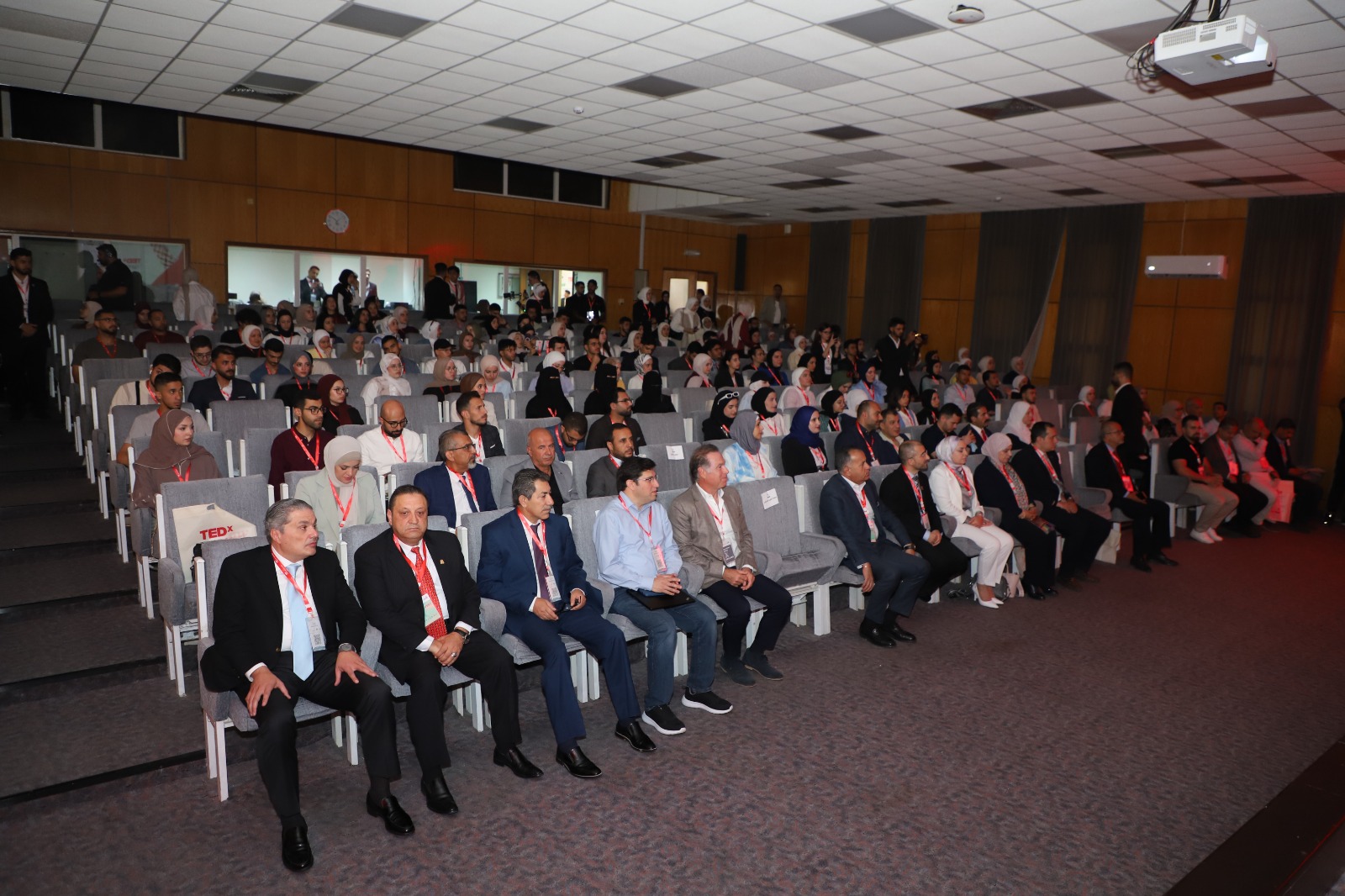
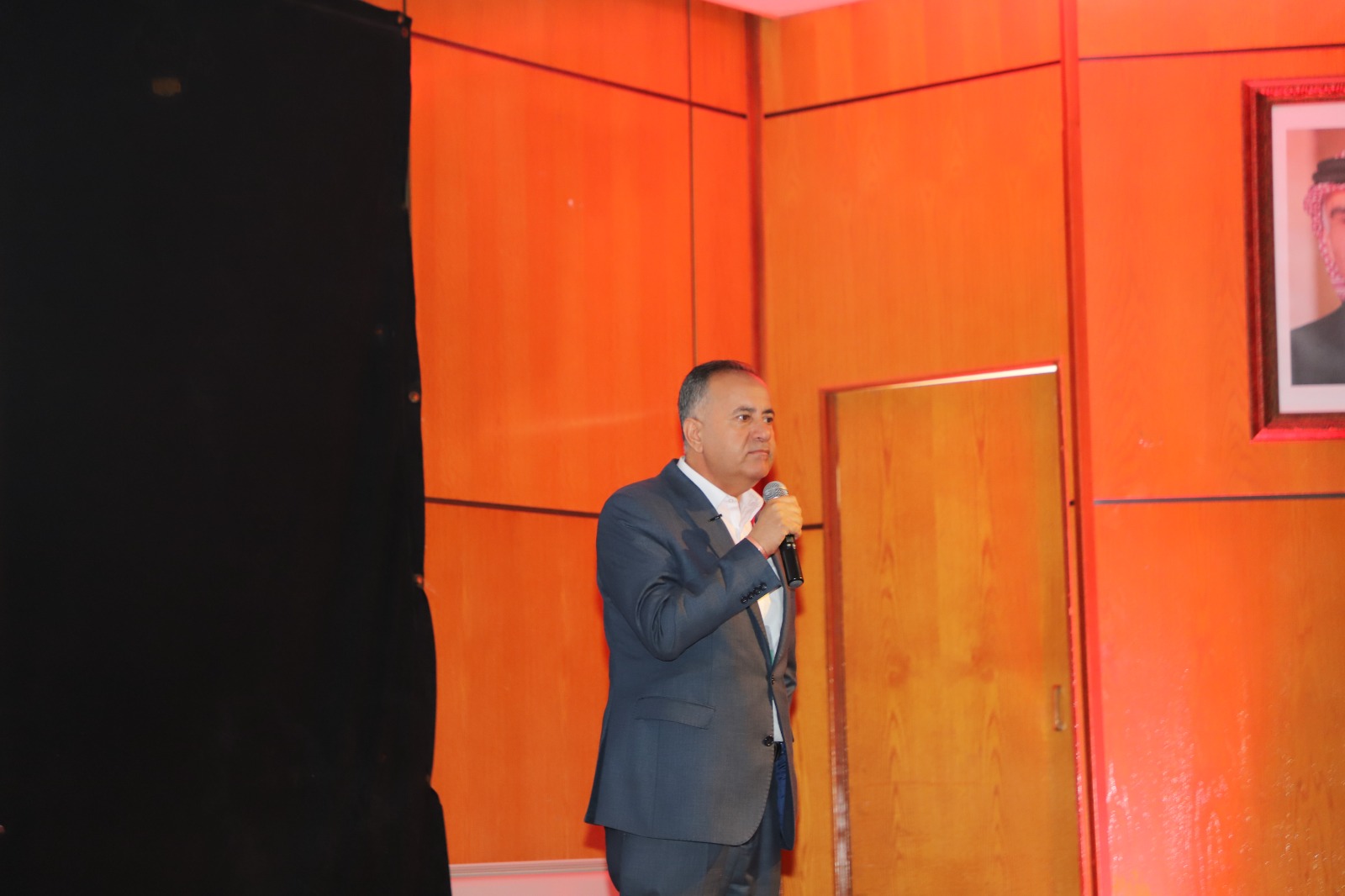
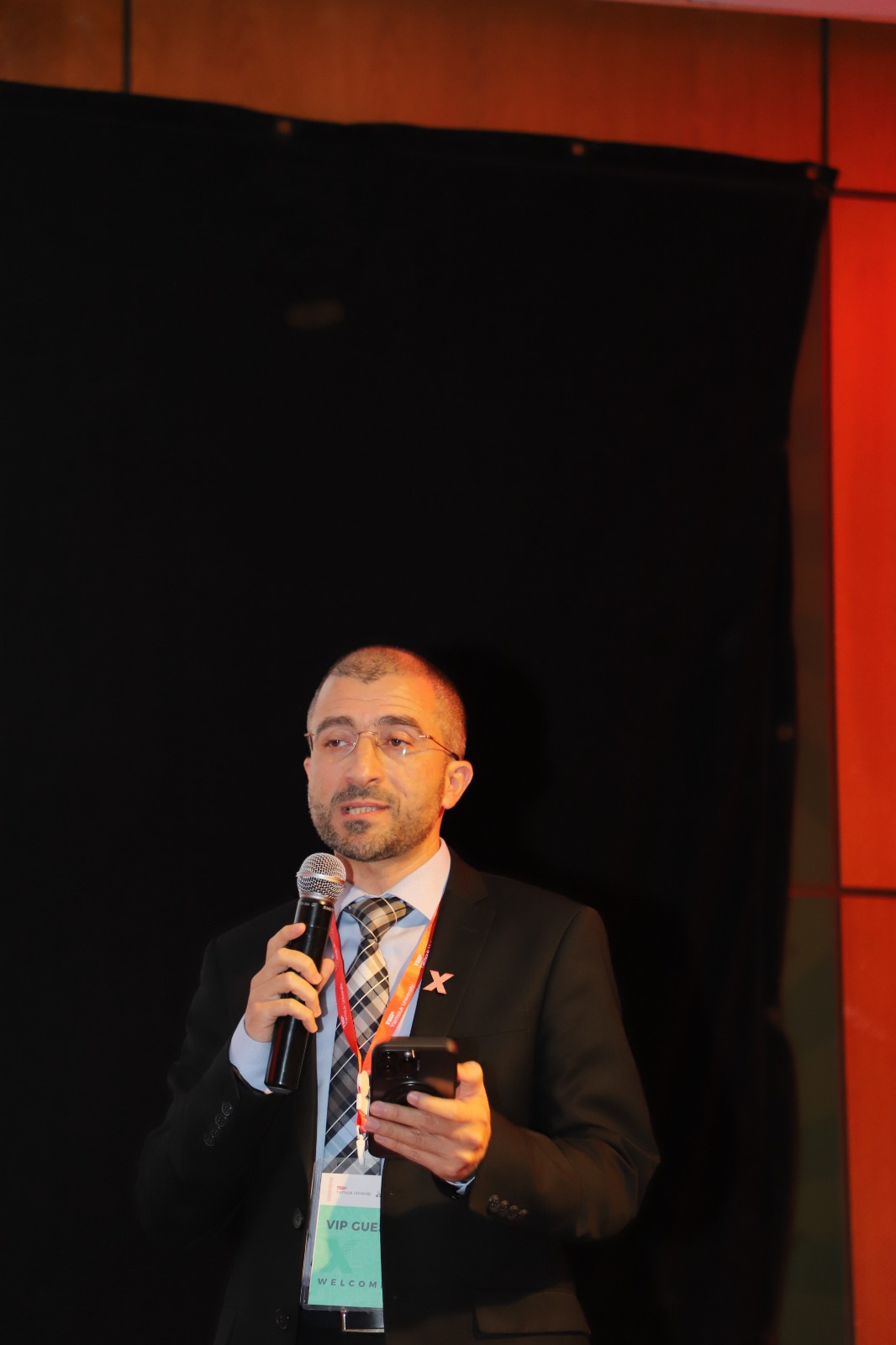
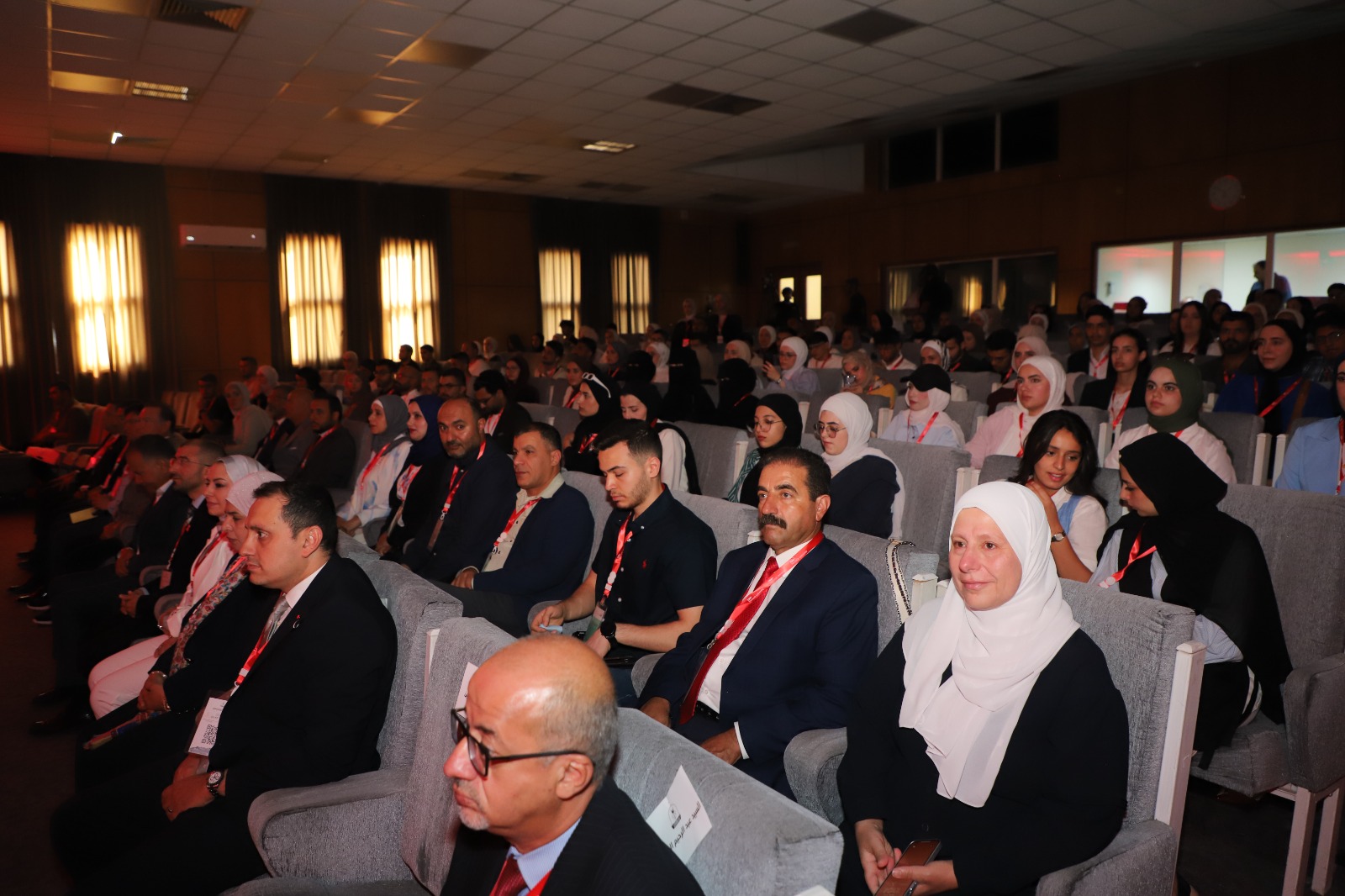
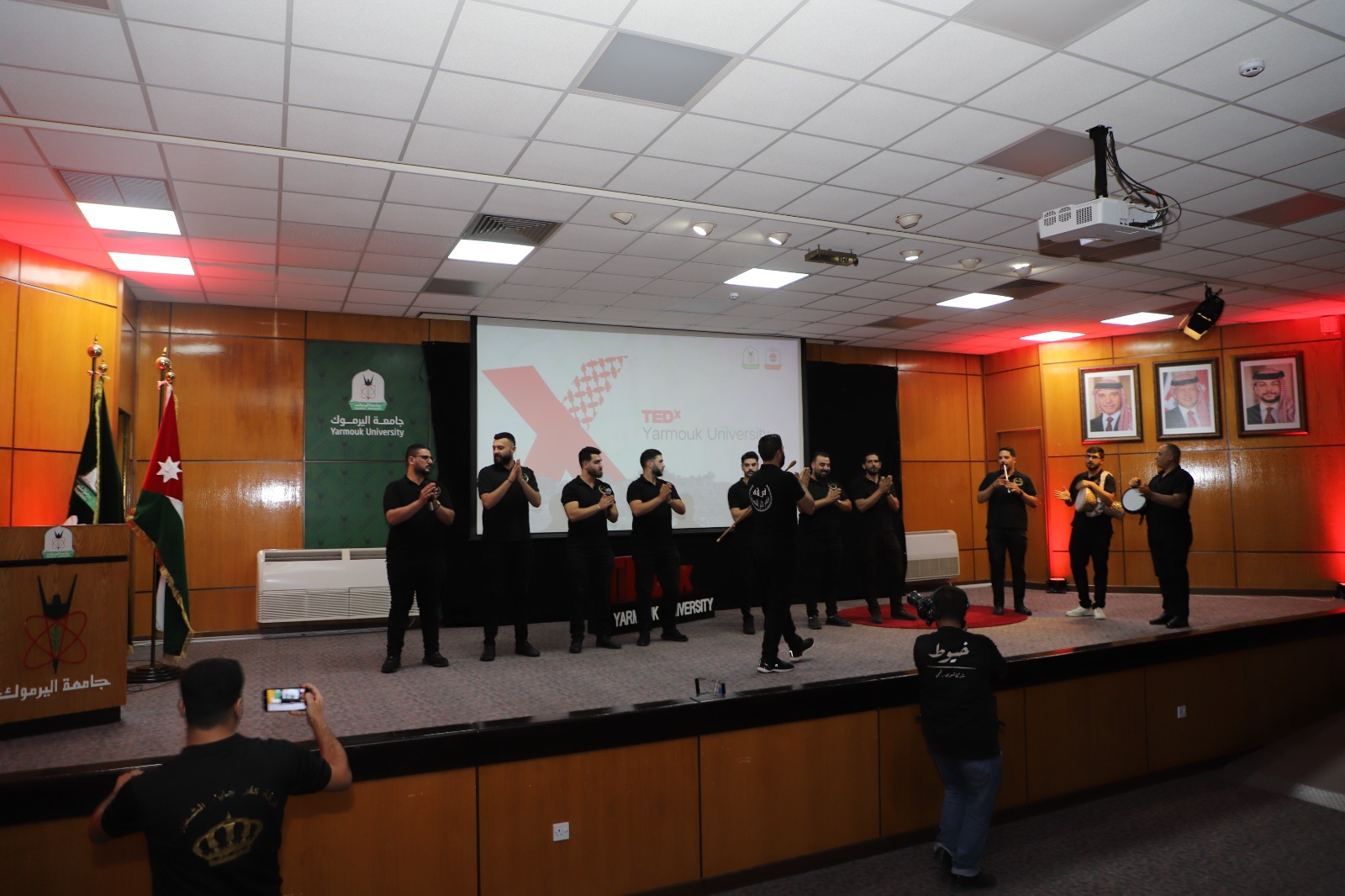
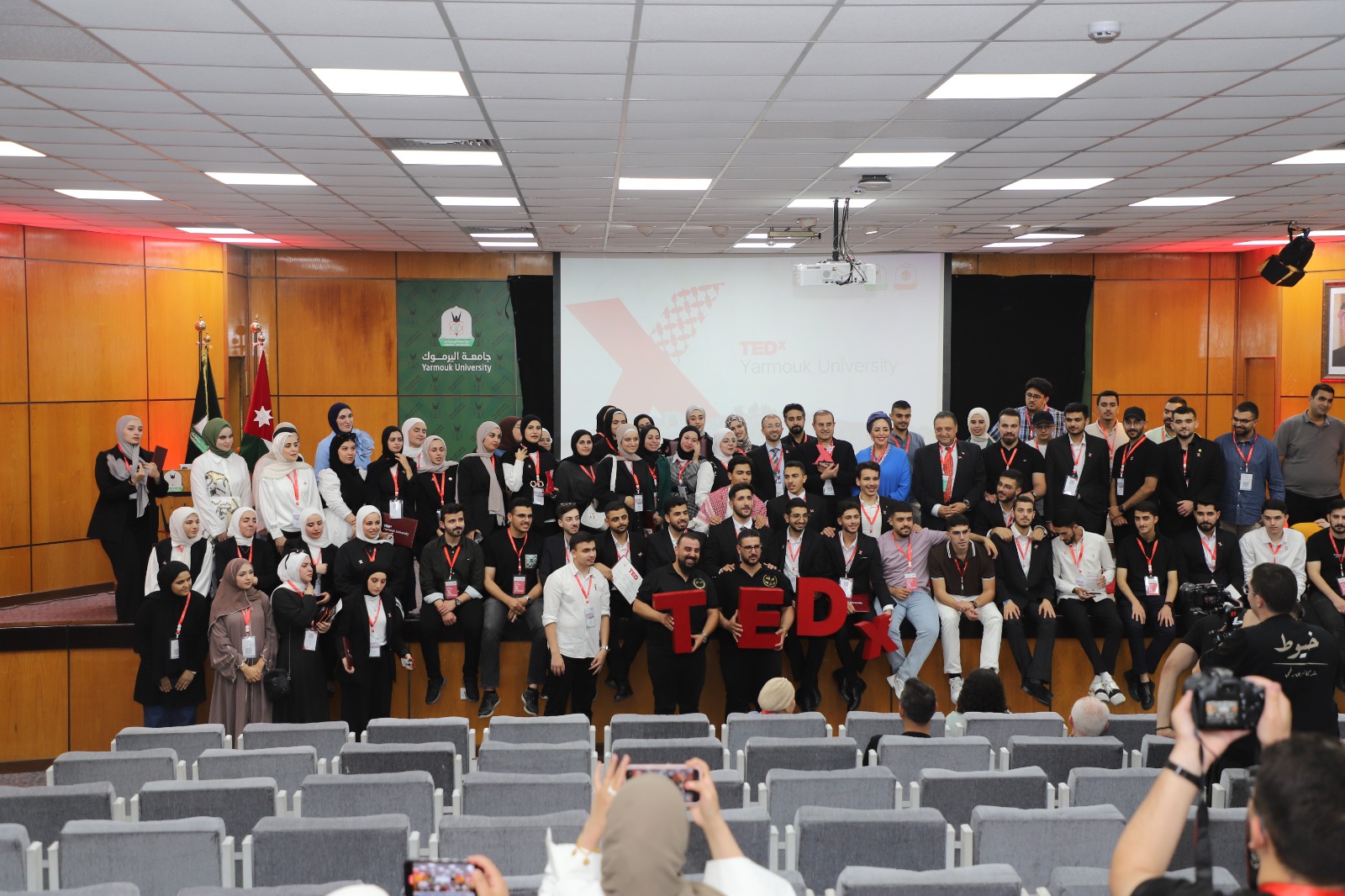
Representing the Minister of Youth, Assistant Secretary-General for Technical and Strategic Affairs Dr. Yassin Al-Hilal sponsored the conference activities TEDxYarmouk University, organized by Al-Hajjawi College of Technological Engineering at Yarmouk University, with the participation of a group of Jordanian speakers and a qualitative presence that included academic leaders, students, and those interested in culture, creativity, and technology.
Al-Hilial confirmed in his opening speech, that this conference reflects the young Jordanian identity that weaves from passion and excellence a global platform for all, stressing that TEDx Yarmouk University represents a unique experience in the north of the Kingdom.
For his part, the Dean of Al-Hajjawi College of Technological Engineering, Dr. Mohammed Al-Zubaidi, expressed his pride in organizing this qualitative event of Yarmouk University, stressing that TEDxYarmouk University is not just an event, but also an embodiment of the university's vision and its leading role in empowering students and promoting the culture of creativity and community participation.
He added that the university's participation in organizing this event comes from its belief that the role of academic institutions is no longer limited to the transfer of knowledge, but extends to include building a stimulating environment for critical thinking, experimentation and leadership, expressing that Al-Hajjawi College is proud that it not only graduates competent engineers, but also creates personalities capable of influencing and serving their societies. Al-Zubaidi praised the great efforts made by the student team organizing this event, consisting of 41 students, appreciating their role in bringing out the event at a high level befitting the university, and expressing his deep thanks to all speakers, sponsors and supporters.
For his turn, the president of the conference, student Hassan Abu Saris, said that his journey with TEDx began in 2022 as a beginner organizer in a small conference, but the passion prompted him to work on creating a deeper and more broad experience at TEDxYarmouk University 2025, stressing that what happened today is an experience made from the hearts of young people, and from a student vision that seeks to present the voices and inspiring ideas of Jordanians to the world.
The conference presented a group of inspiring speakers whose backgrounds and experiences were diverse.
It is noteworthy that the TEDxYarmouk University conference is one of the most prominent youth events held in the north of the Kingdom under the international TEDx license, which came this year under the title: "From the heart of Jordan to the world", embodying the creative Jordanian spirit, which seeks to create an impact beyond borders.
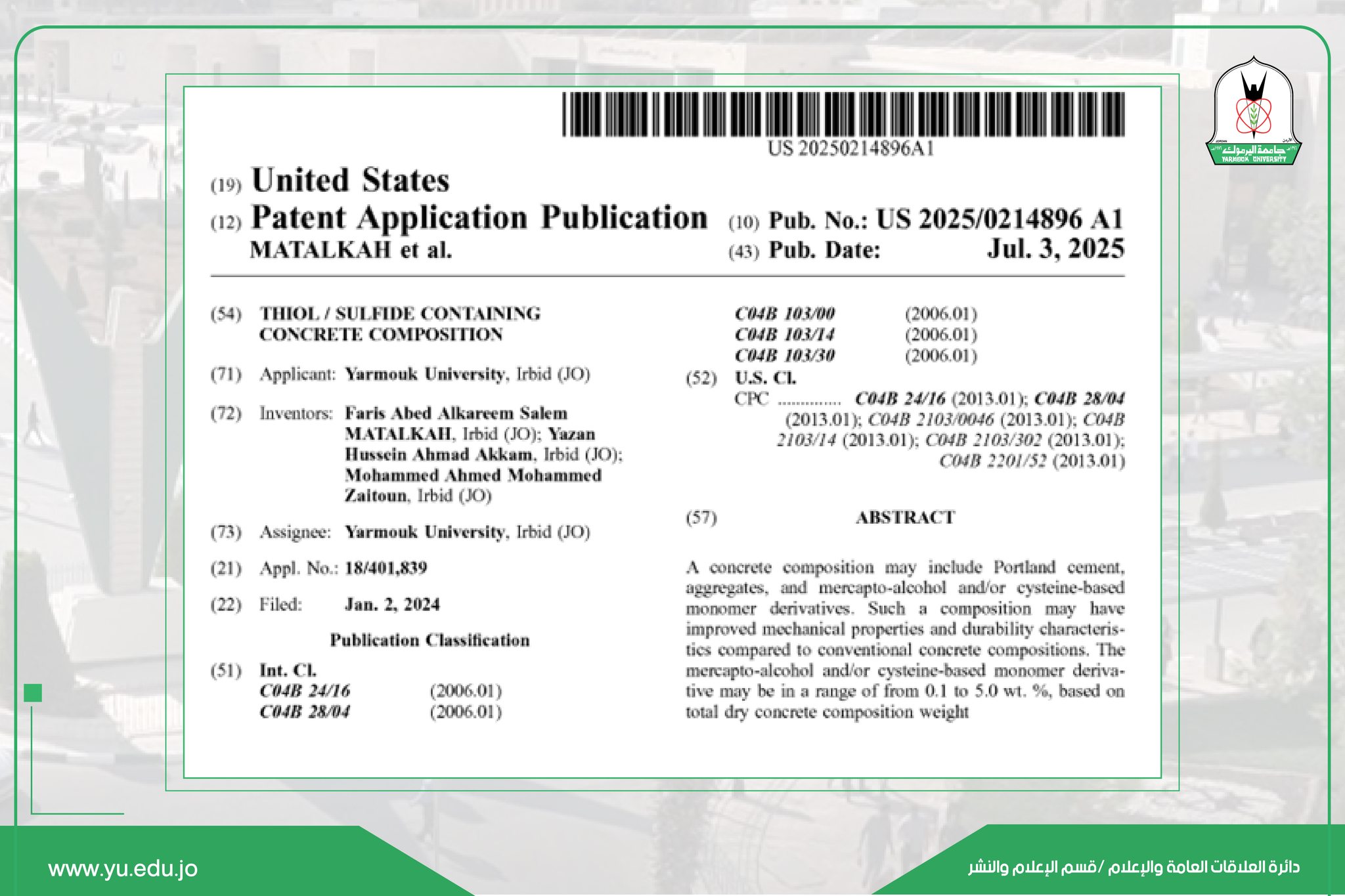
A research team at Yarmouk University has achieved a research milestone by publishing a patent application to the United States Patent and Trademark Office (USPTO) for an invention entitled “Concrete Composition Containing Thiol/Sulfide Compounds”.
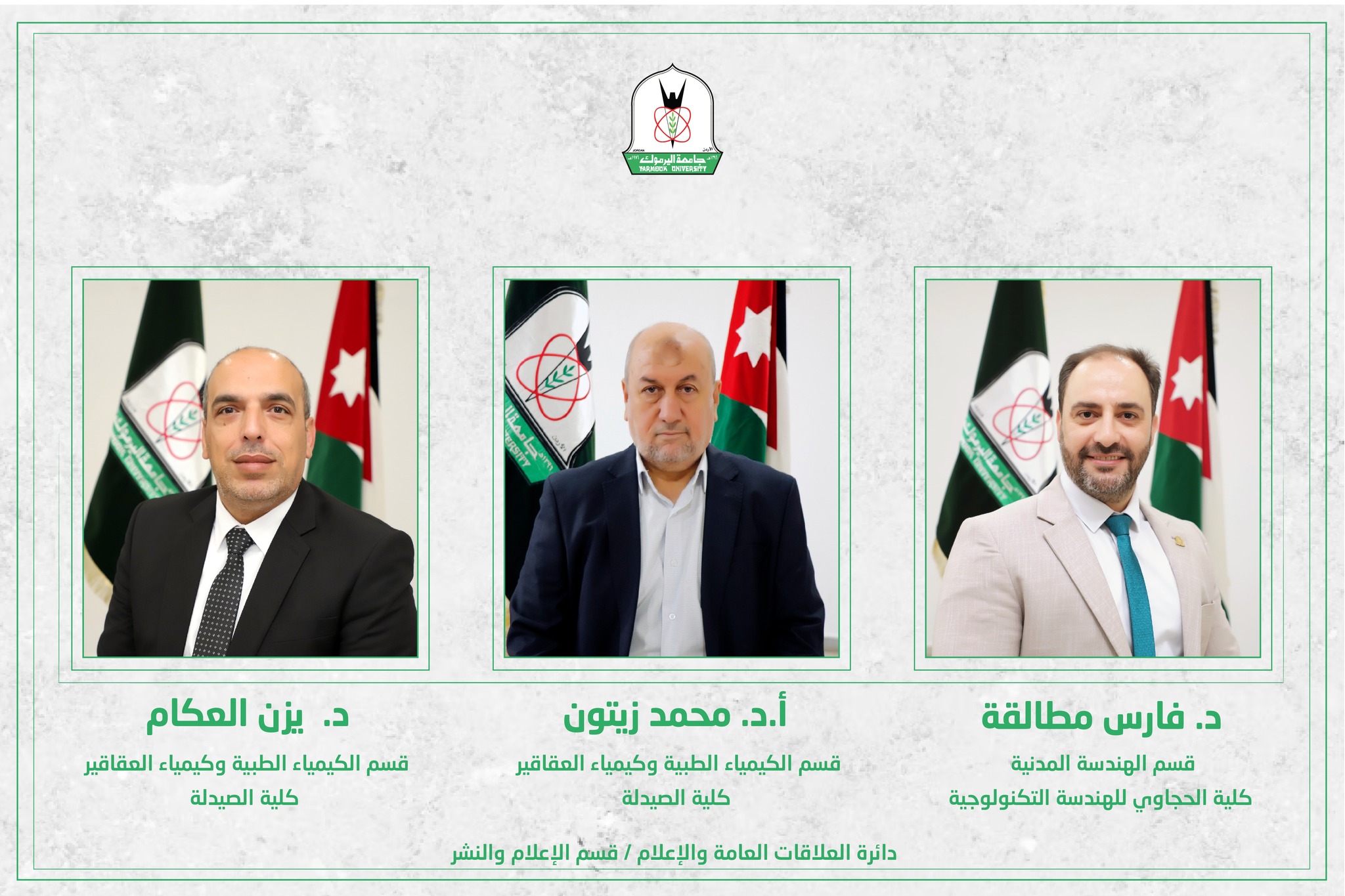
The research team includes Dr. Fares Matalqa from the Department of Civil Engineering at the Hijjawi Faculty of Engineering Technology, along with Prof. Mohammad Zaitoun and Dr. Yazan Al-Akkam from the Department of Medicinal and Pharmaceutical Chemistry at the Faculty of Pharmacy.
The patent application published by the Technology Transfer Office at the Deanship of Scientific Research and Postgraduate Studies addressed the development of a modified concrete composition that includes thiol-alcohol derivatives and cysteine-derived compounds, to enhance the mechanical strength of concrete by up to 50% compared to conventional concrete and improve its durability in harsh environments, through mechanisms that accelerate the cement hydration process by reducing the water content in the mix, this improves density and structural properties, reducing cement consumption without compromising overall performance.
According to the study, adding small amounts of these organic compounds to the concrete mix enhances the hydration reaction of cement. It also creates an effective alkaline medium that strengthens bonding and cohesion properties while reducing water loss.
Test results have shown that using cysteine and thiol alcohol derivatives before incorporating them into concrete mixtures improves the structural performance and increases their break-resistance after 7-28 days of curing.
The research team emphasizes that this achievement reflects real integration between engineering and pharmaceutical sciences, standing as one of the multidisciplinary applied models that the university aims to support, and also confirms that using amino acid derivatives in building materials opens up new horizons for using these materials in the construction industry to improve different properties of concrete mixtures.
According to the research team, this research work is a successful example of fruitful collaboration between pharmacy and engineering specialties, as it allows an integration of experiences in molecule design and assessing its behavior in a cement environment to produce a unique combination with promising applications in sustainable construction.
The Deanship of Science Research and Postgraduate Studies is currently working on marketing the patent and seeking industrial and investment partners to transform the composition into a commercially usable product for the building and construction sector, thereby contributing to supporting the knowledge economy and strengthening the university's role in innovation and entrepreneurship.
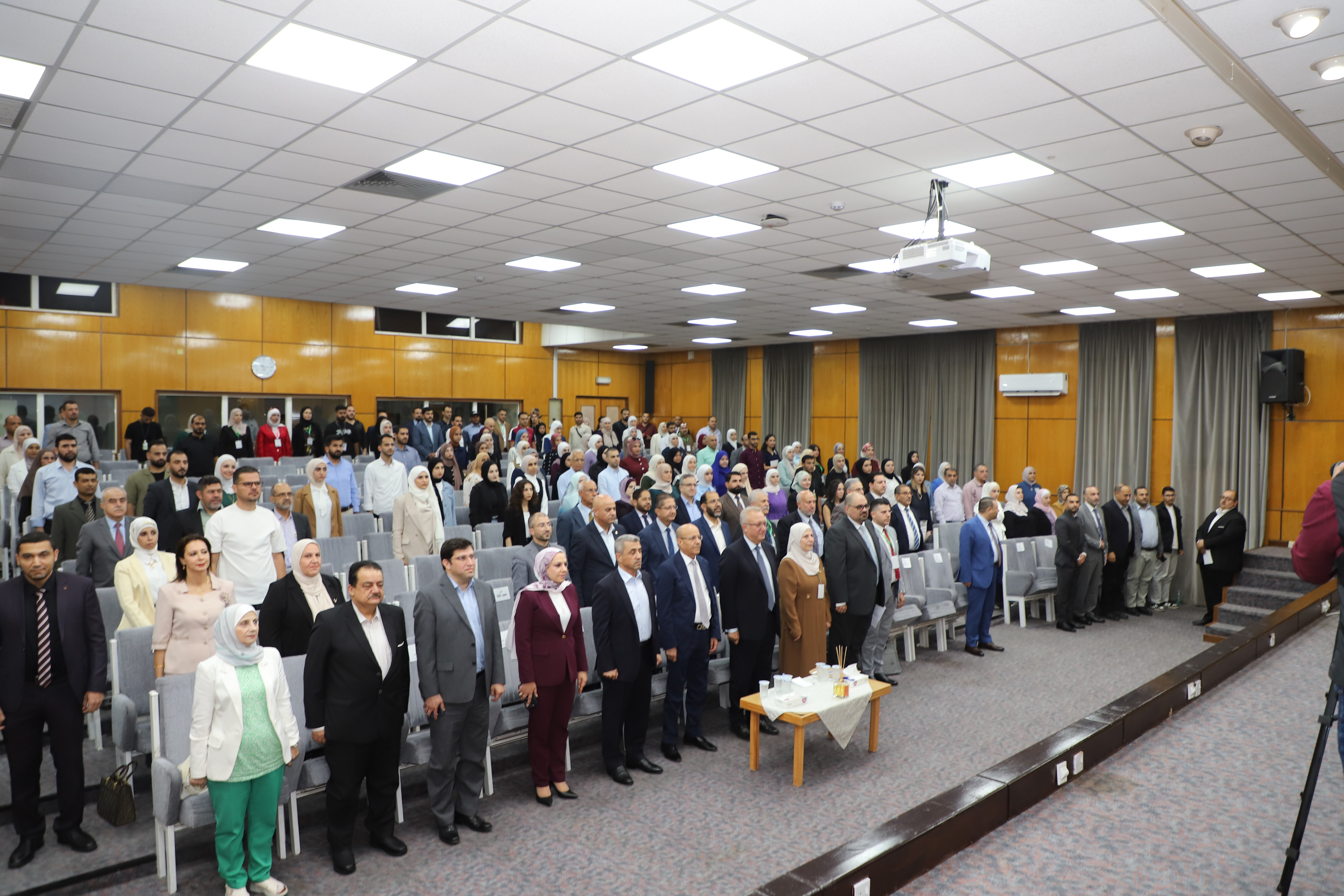
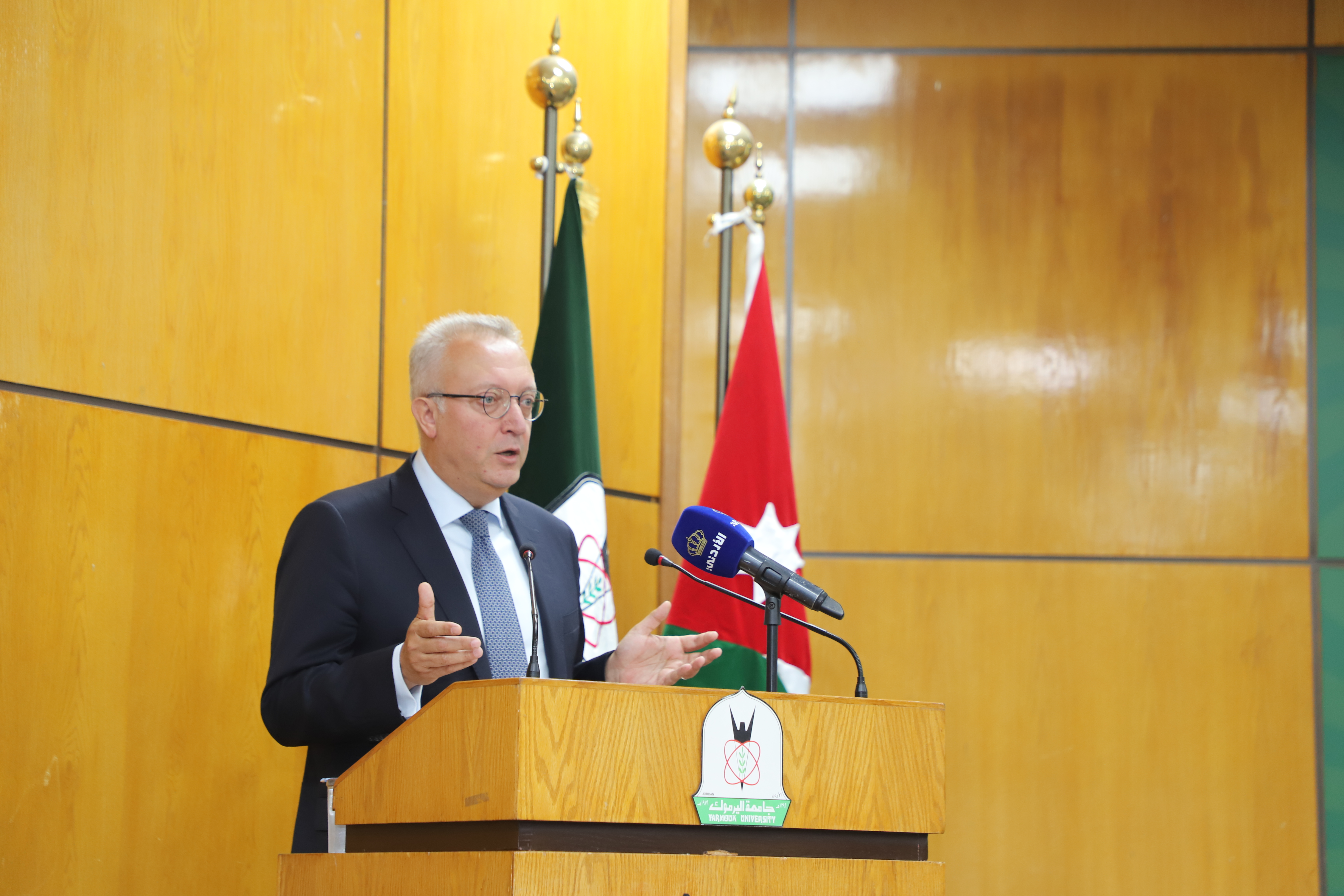
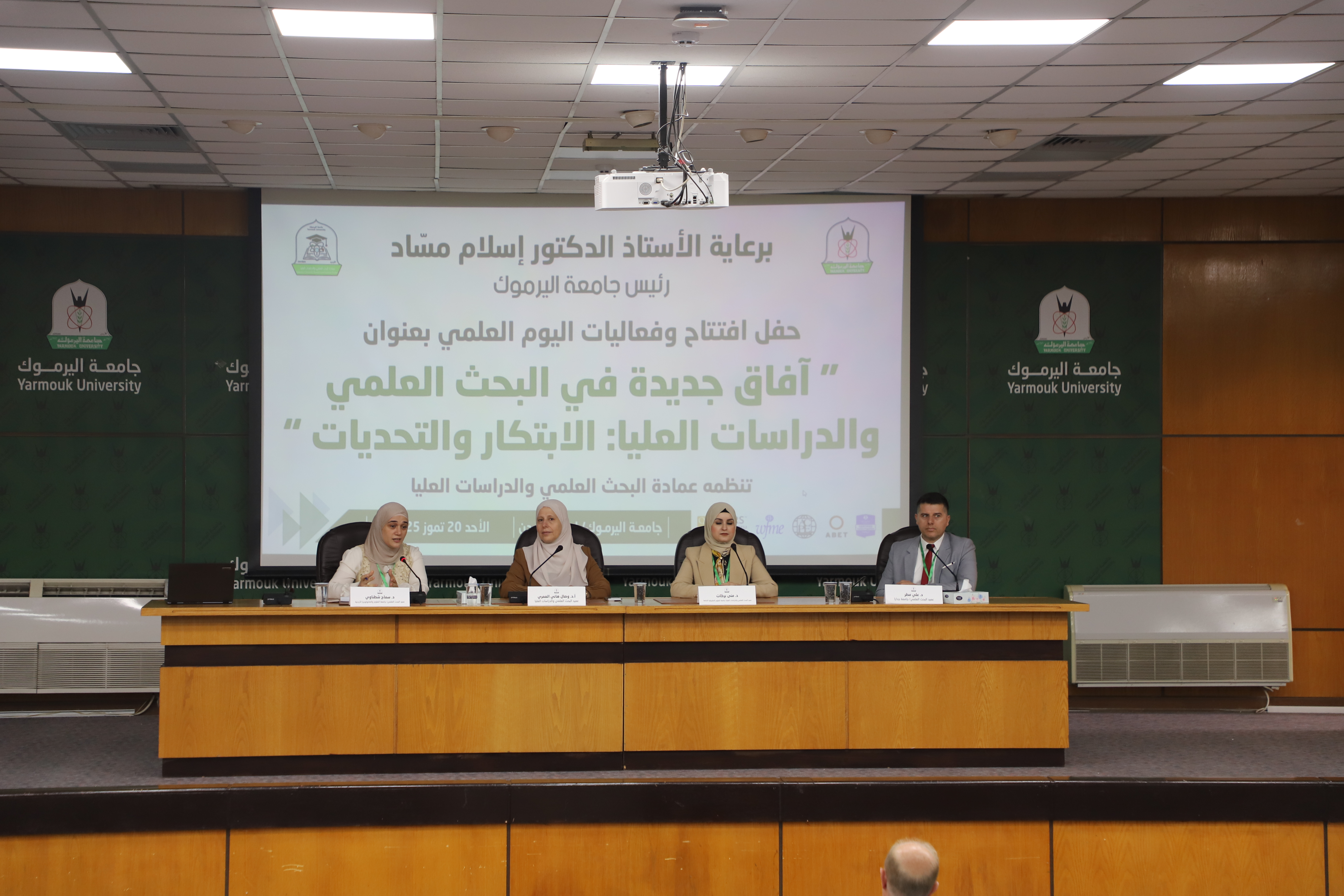
The President of Yarmouk University, Dr. Islam Massad, affirmed the University's strong belief that knowledge is no longer a choice but a necessity. He emphasized that scientific research is the most reliable path toward sustainable development, knowledge sovereignty, and a better future.
Speaking at the opening of the Scientific Day, organized by the Deanship of Scientific Research and Graduate Studies under the title "New Horizons in Scientific Research and Graduate Studies: Innovation and Challenges", Dr. Massad added that scientific research is the key to national progress and to finding effective solutions to the various challenges facing societies.
Dr. Massad stressed Yarmouk University’s commitment to translating the Royal directives that prioritize education, youth empowerment, and the development of scientific research as a fundamental pillar of national progress. Accordingly, the University has developed a vision with clear steps and quality initiatives that have led to notable achievements on both local and regional levels.
He added: "Today, Yarmouk University proudly honors a group of distinguished researchers, faculty members, and graduate students whose innovative ideas and promising scientific efforts reflect the bright image of the University and contribute to building a Jordan defined by excellence and ambition."
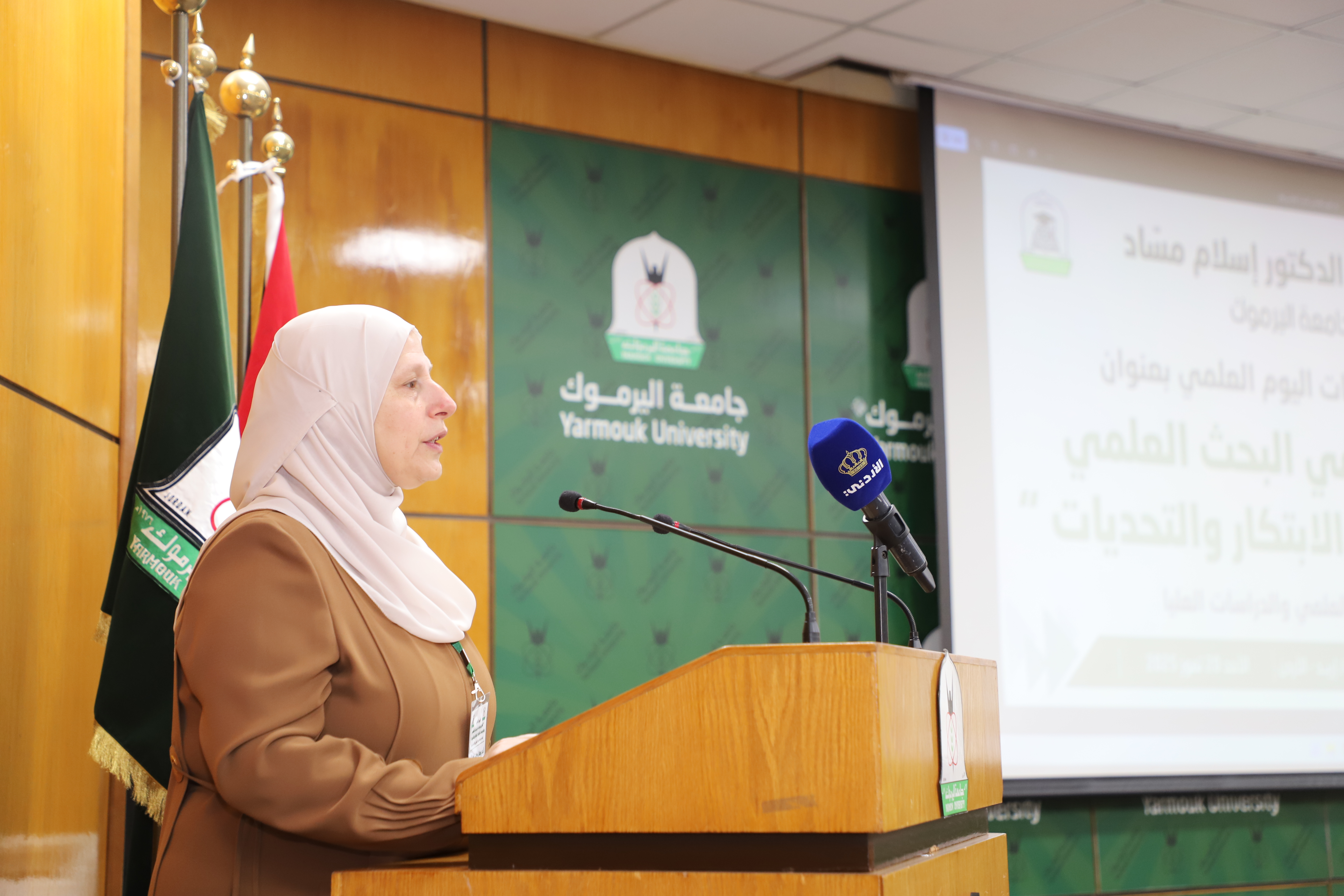
For her part, the Dean of Scientific Research and Graduate Studies, Dr. Wissal Al-Omari, noted that this Scientific Day marks the culmination of the University's ambitious strategic vision. The aim is to promote a culture of productive scientific research and foster an academic environment that encourages creativity, adapts to change, and responds thoughtfully to challenges through sound scientific methodology and responsible critical thinking.
She confirmed that scientific research and graduate studies are essential pillars of academic institutions’ progress and excellence. Graduate programs, she explained, are no longer merely advanced stages of education; they have become platforms for creative thinking, hubs for knowledge generation, and incubators for intellectual leadership capable of making a meaningful impact and shaping the future.
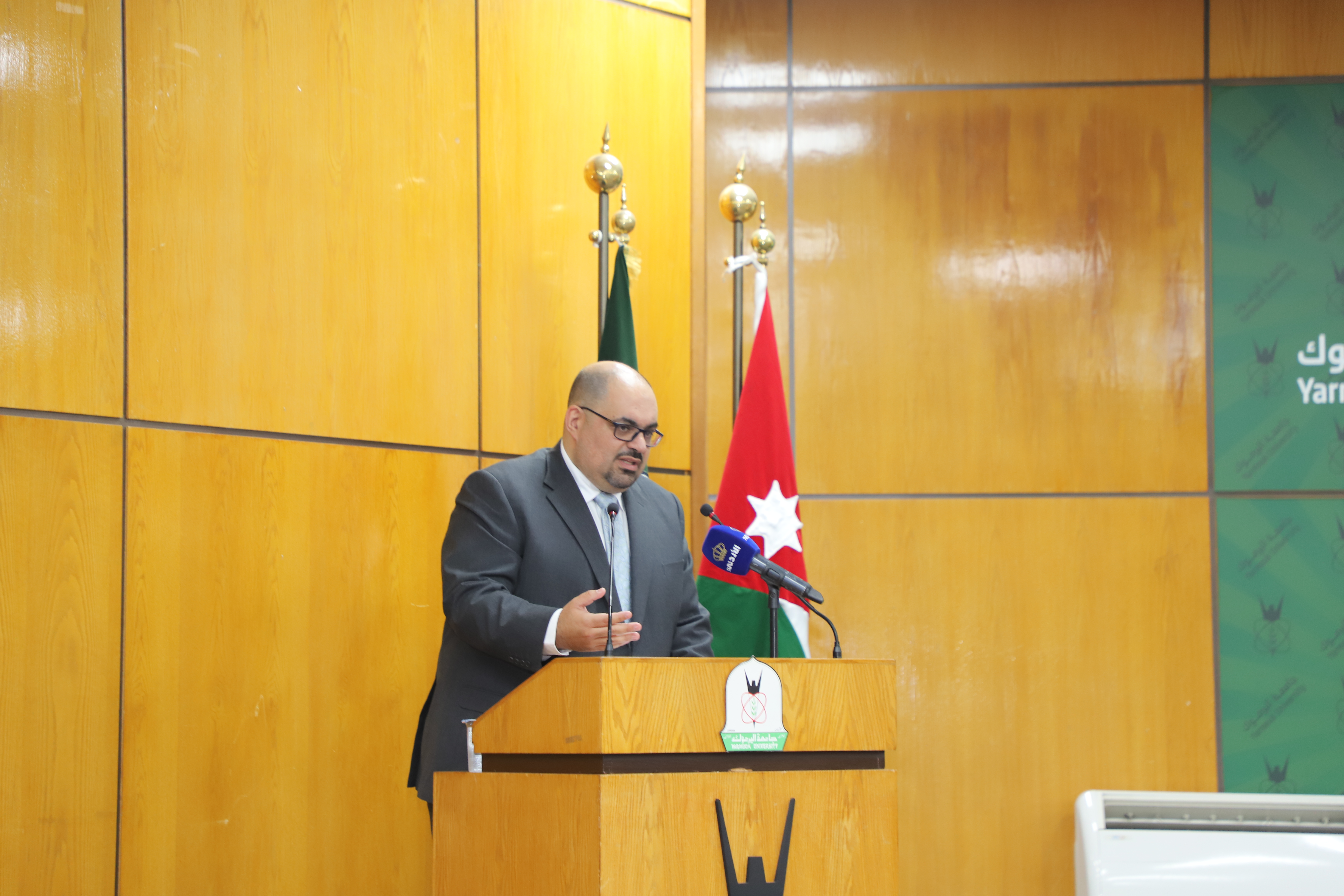
As part of the Scientific Day activities, Dr. Tareq Maghtash, Secretary General of the National Center for Epidemics and Disease Control, spoke about the importance of scientific research and its role in the development of societies. He described it as the key to the future and at the heart of every positive change we aspire to for our country. He stressed the need for countries to give special attention to scientific research due to its critical role in boosting national economic output.
He called for unified efforts to make scientific research a true national priority, to develop policies that support research, and to align academic studies with national and societal needs. He also emphasized the importance of creating national funding programs in cooperation with the industrial sector and giving youth the opportunity to lead.
The opening ceremony also included the honoring of distinguished university researchers for the year 2025 across engineering, scientific, medical, and humanities faculties.
- At the level of engineering and scientific faculties, Dr. Massad honored Dr. Haitham Bani Salameh (Hijjawi Faculty for Engineering Technology), Dr. Eyad Abu Doush (Faculty of Information Technology and Computer Sciences), and Dr. Ali Shehadeh (Hijjawi Faculty for Engineering Technology).
- In the medical and health faculties, Dr. Massad honored Dr. Omar Qamouh, Dr. Mirvat Al-Sous, and Dr. Haneen Amawi from the Faculty of Pharmacy.
- In the humanities faculties, he honored Dr. Khalaf Al-Tahat (Faculty of Media), Dr. Khaled Al-Bashayrah (Faculty of Archaeology and Anthropology), and Dr. Sahm Al-Nawafleh (Faculty of Business).
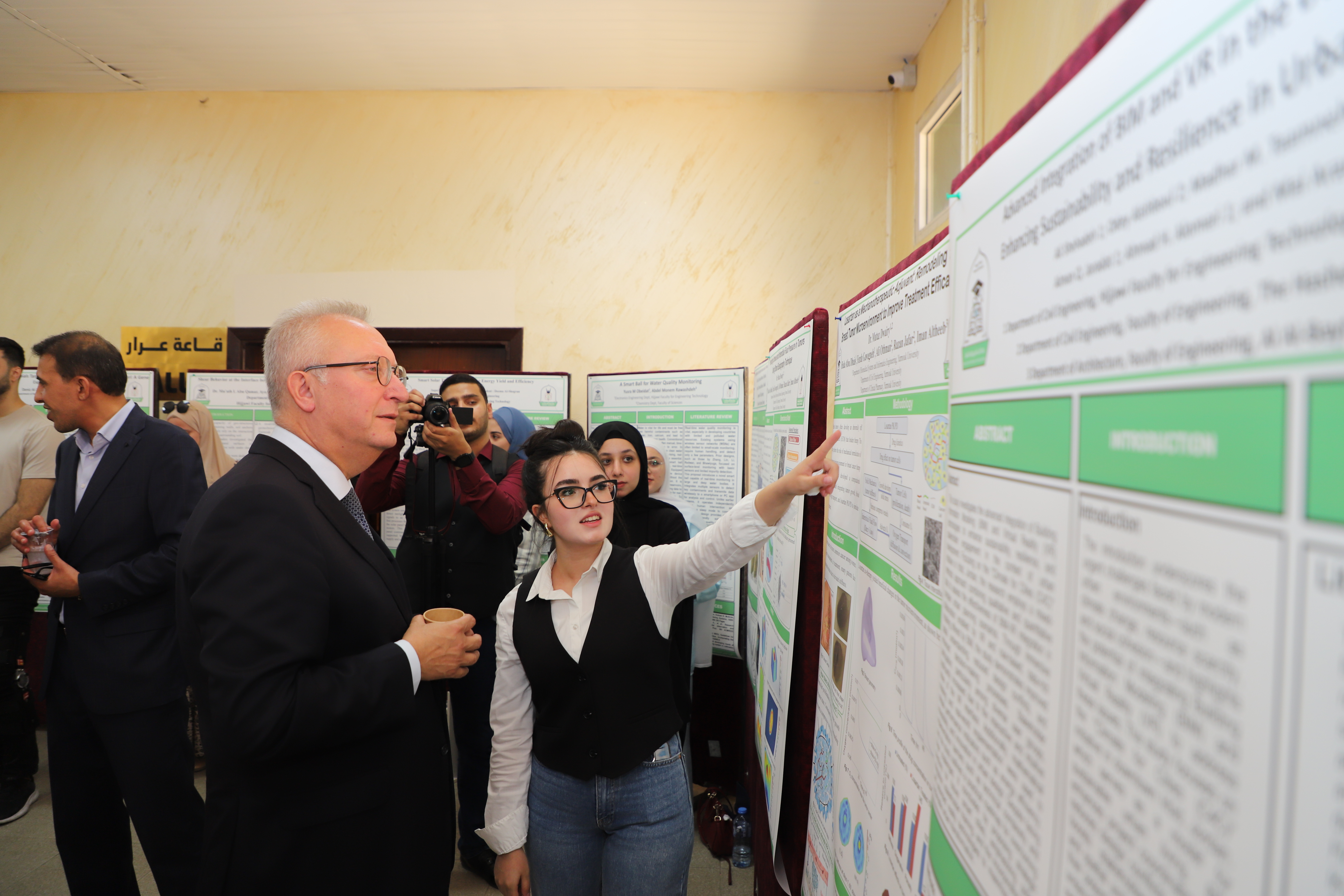
The Scientific Day also featured a student research poster exhibition and two lectures. The first, delivered by Eng. Mohammad Diab, Head of the Intellectual Property and External Licensing Department at the Intellectual Property Commercialization Office, was titled “Protecting the Outcomes of Innovative Scientific Research.” The second lecture, given by Dr. Rami Nassar from the group of multinational pharmaceutical companies, was titled “How Can Jordan’s Healthcare System Prepare for Tomorrow?”
The event also included a panel discussion with several Deans of Scientific Research titled "Opportunities and Challenges for Scientific Research in Jordanian Universities," and a 5-Minute Thesis (5MT) competition where graduate students presented their theses and dissertations in just five minutes. The day concluded with the honoring of the winners of the Best Poster Competition and the 5MT Competition.