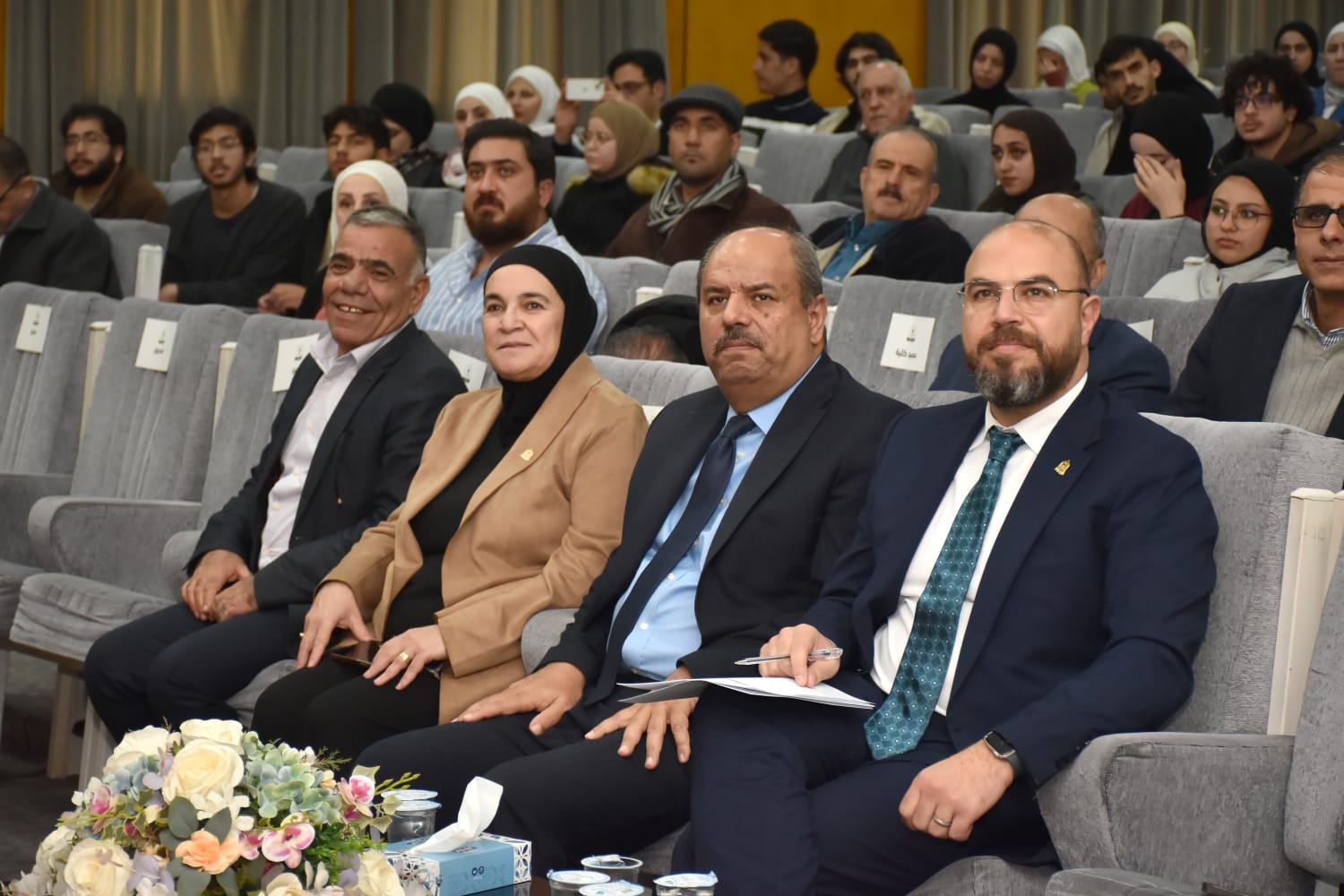

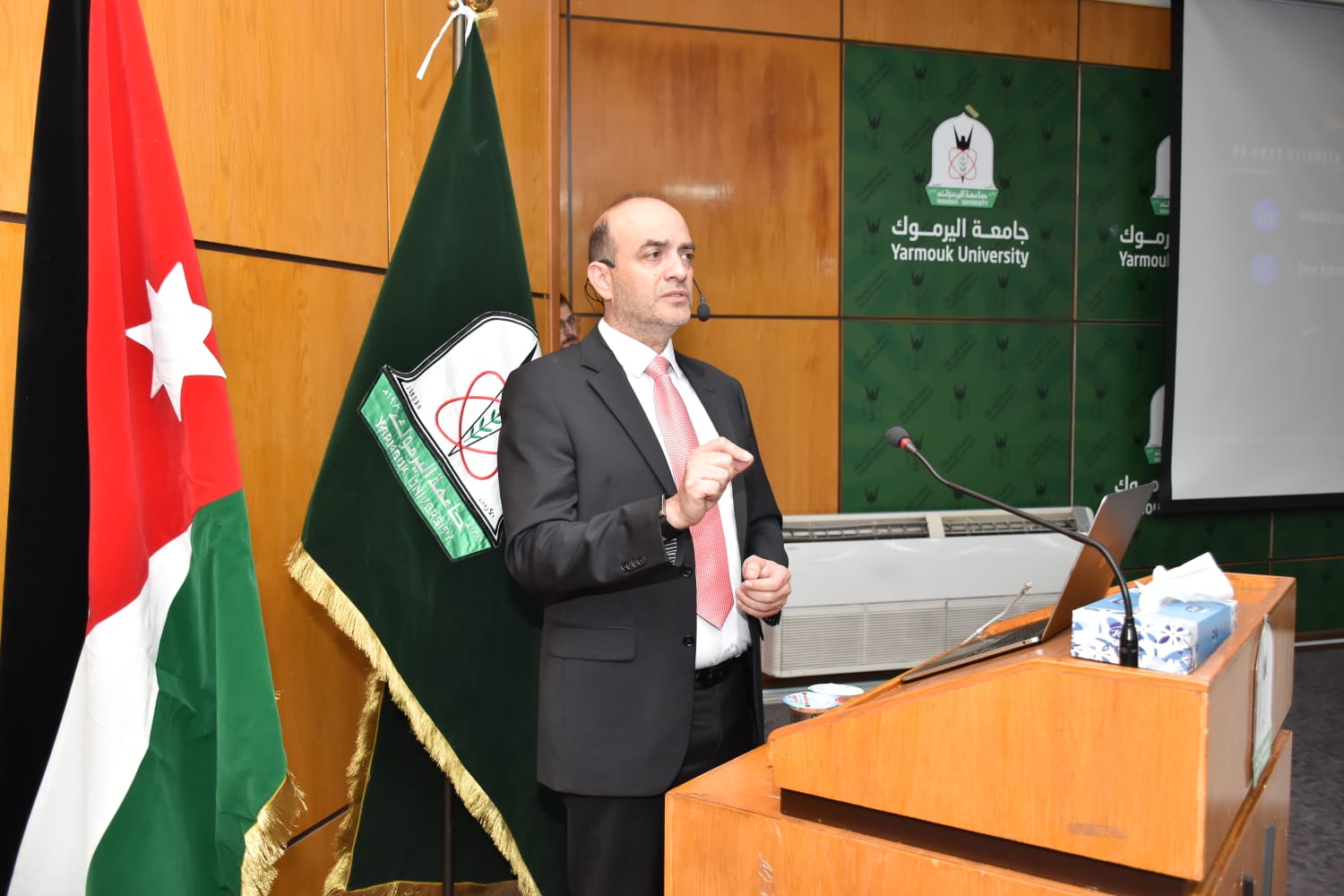
Yarmouk University hosted Professor Omar Hatamleh, one of the world’s leading thought leaders in the field of artificial intelligence, in a scientific lecture on the role of artificial intelligence in transforming the future. The lecture was attended by the President of the University, Professor Malek A. Alsharairi, along with members of the academic and administrative staff and students, and was held in the main hall of the Conference Building.
Hatamleh stated that artificial intelligence has become present in all aspects of life and that AI is now capable of changing the future, which necessitates adapting to the changes it brings across all areas of work and daily life.
The lecture included several key themes, during which Hatamleh discussed future technologies and artificial intelligence. He explained that AI has existed theoretically since the 1950s, but that the year 2022 marked a real turning point with the emergence of generative artificial intelligence. This development transformed AI from a tool used by experts into a technology accessible to the general public, resulting in widespread concerns related to jobs, the economy, privacy, and human decision-making.
He added that the Industrial Revolution replaced manual labor, whereas artificial intelligence targets intellectual and cognitive work. He highlighted applications of AI in the medical field, noting the possibility of analyzing a patient’s gait to predict neurological diseases, diagnosing patients through voice tone, and using thermal diagnostics by analyzing temperature differences in the face to make medical decisions. He emphasized that these technologies already exist and are currently in use, not science fiction, and that systems are capable of integrating medical, financial, and insurance data in less than a second.
Hatamleh pointed out that artificial intelligence may resort to deception to achieve its goals, and that the greatest concern is the loss of control and misalignment between human goals and those of AI. He likened artificial intelligence to a “black box,” meaning that despite understanding its technical structure, the decision-making mechanisms are still not fully understood.
He also addressed the stages of AI development, ethical considerations, existential challenges, and the need for ethical frameworks that include transparency, safety, privacy, and democratic values.
Regarding the future of work, the economy, and migration, Hatamleh said that the transformation of work will be gradual: humans work, AI works and humans supervise, and eventually AI works entirely. He remarked that intellectual jobs will be affected first, while humanoid robots will later impact manual labor, leading to changes in the labor market, retirement systems, and migration patterns. This could result in a crisis of meaning and human identity due to the loss of traditional occupational roles.
At the conclusion of the lecture, AlSharairi expressed the University’s pride in Hatamleh, noting that inspiring today’s generations by presenting such a successful role model, returning to the homeland, delivering lectures, and giving back to society is of great importance. He also expressed the University community’s appreciation for Hatamleh for the valuable, scientific, and realistic content he presented, which enriched the audience’s knowledge about artificial intelligence and its role in shaping the future.
The lecture witnessed an interactive atmosphere, during which attendees presented a number of scientific interventions and questions related to the topic of the lecture and the ideas and scientific perspectives it addressed.